By MarriageBiodata.App English Editorial TeamPublished
Marriage Biodata vs Resume vs CV: Key Differences Explained [2026 Guide]
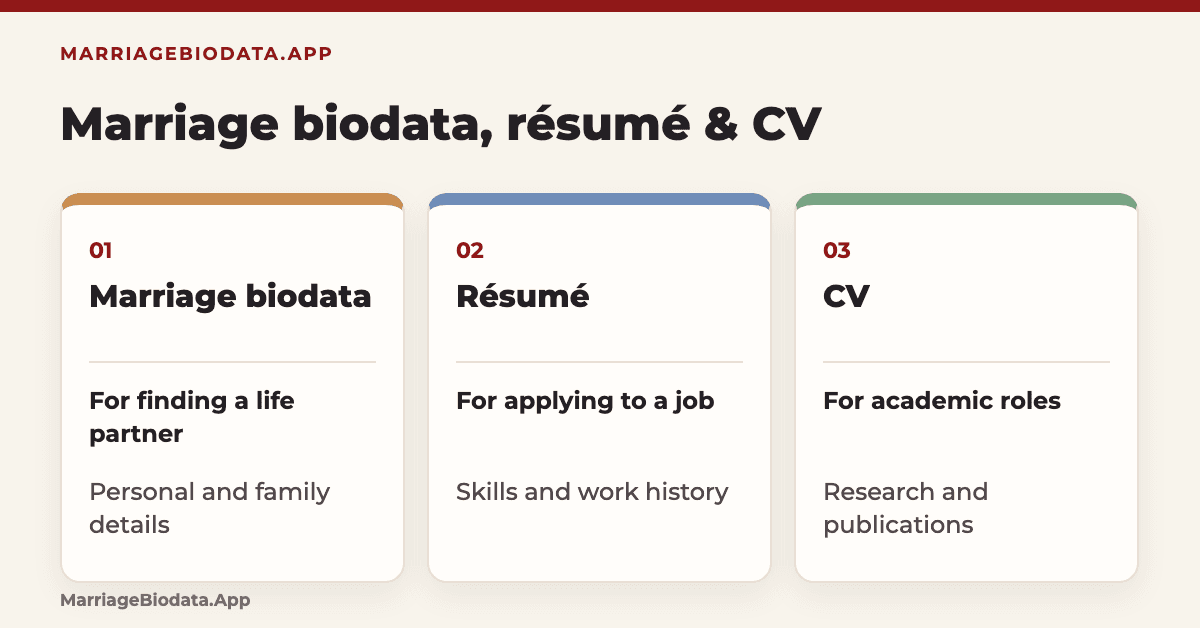
A marriage biodata, job resume and academic CV serve different readers. For a prospective match, write a short introduction to the person, their current life and family context, with one approved contact. Keep job achievements in a resume and research history in a CV. Add a photo or tradition details only if the person wants to share them.
Marriage Biodata vs Job Resume vs CV: Quick Comparison
The main difference is the reader and purpose. The table gives a quick comparison; each document can be shorter or longer when the situation calls for it.
| Feature | Marriage Biodata | Job Resume | Job CV (Curriculum Vitae) |
|---|---|---|---|
| Primary Goal | To find a life partner / Arrange a marriage | To land a job interview | To apply for academic or research roles |
| Who Reads It? | Parents, relatives, & prospective matches | Recruiters & Hiring Managers | Professors, Grant Committees |
| Personal Details | Name, current city and work; community or horoscope only if chosen | Low Priority (Just contact info & city) | Low Priority (Contact info) |
| Family Info | Brief context, with permission | None (It’s irrelevant for jobs) | None |
| Photos | A recent photo only with the person’s consent | Optional (Usually avoided to prevent bias) | Optional |
| Tone of Voice | Honest, humble, and family-oriented | Professional, persuasive, and action-oriented | Scholarly, detailed, and factual |
| Length | 1-2 Pages (Quality over quantity) | 1 Page (Standard for most jobs) | 2+ Pages (Detailed history) |
When to use each document
Marriage biodata
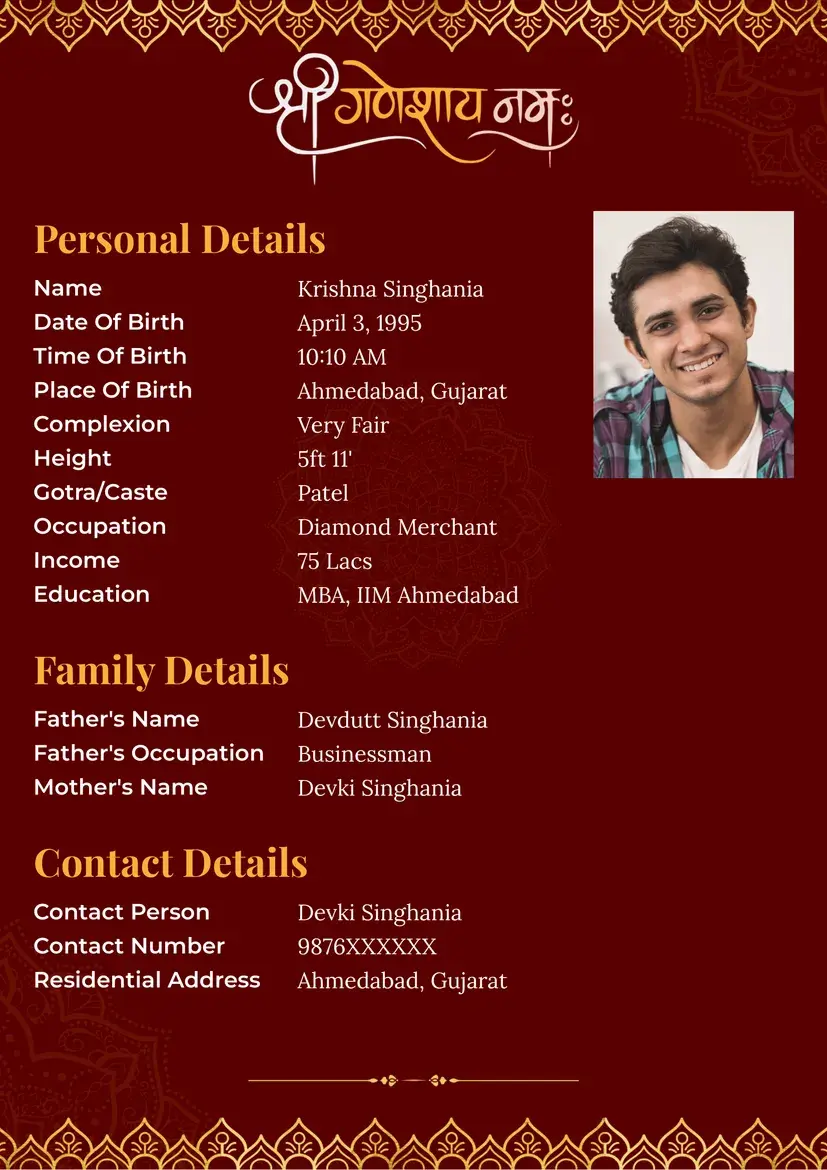
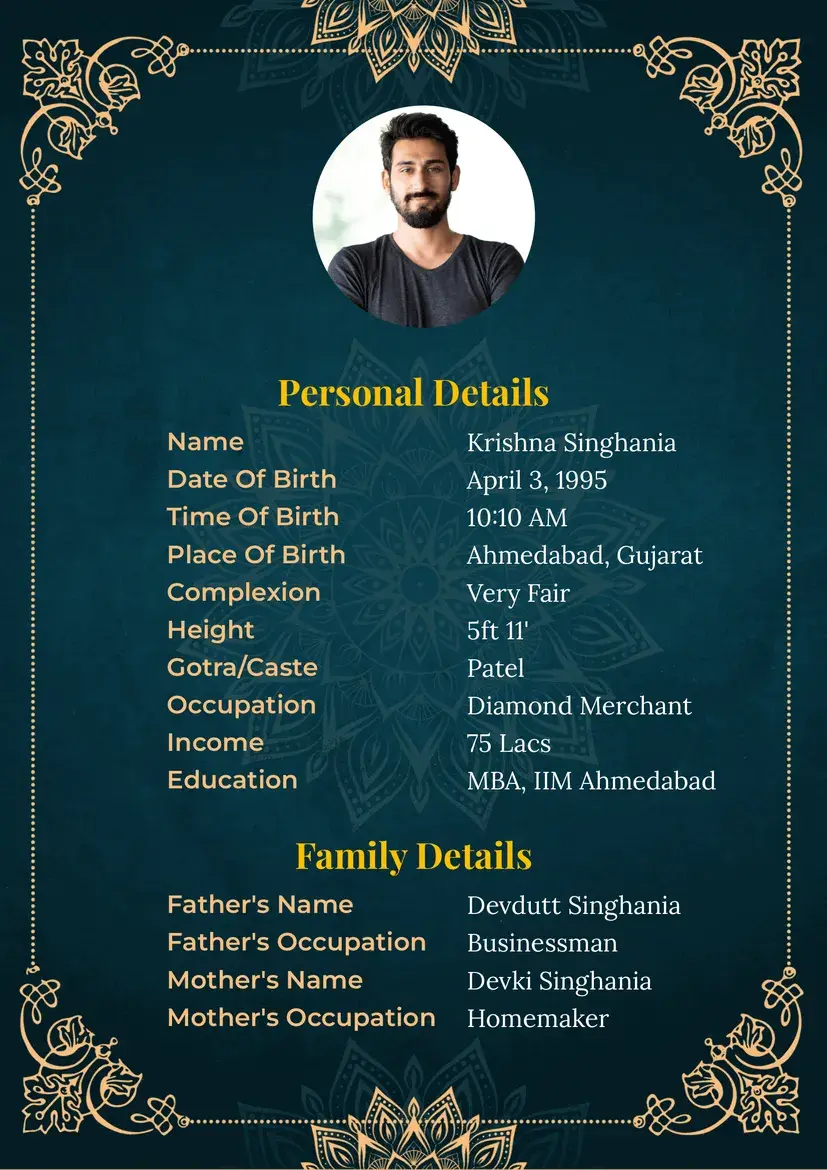
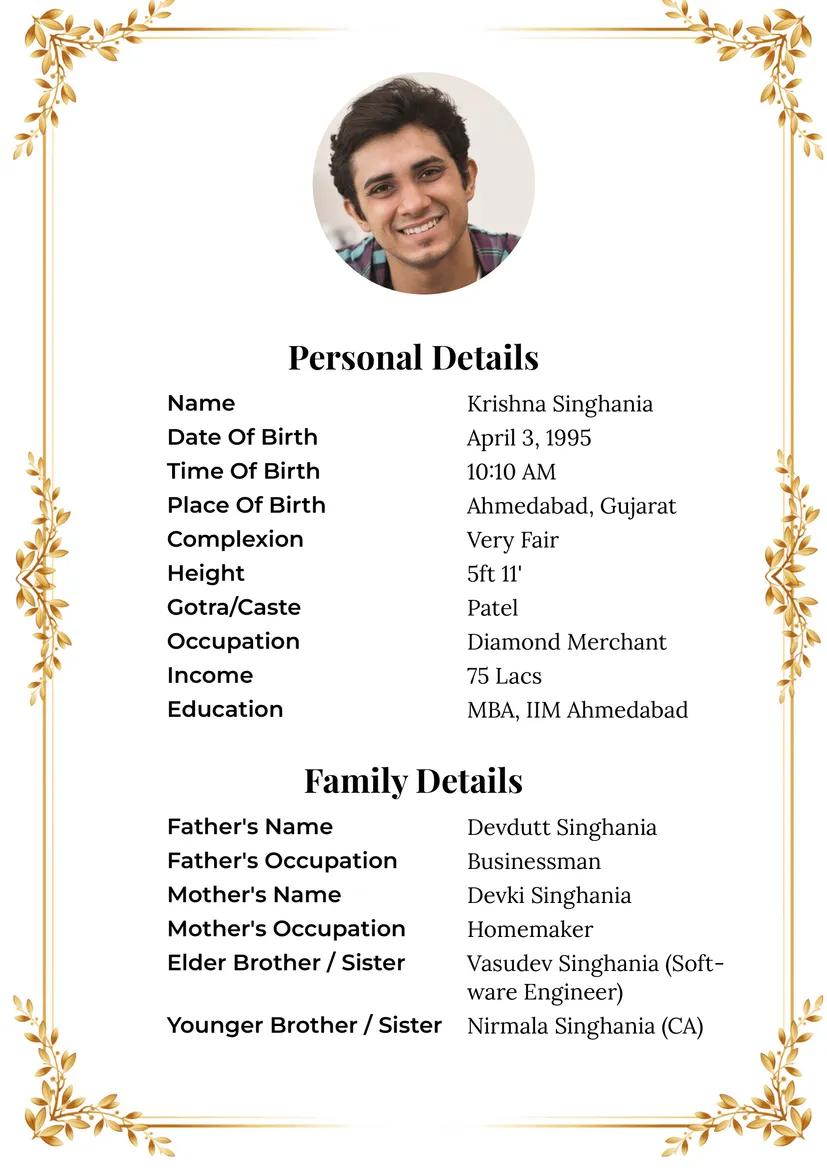
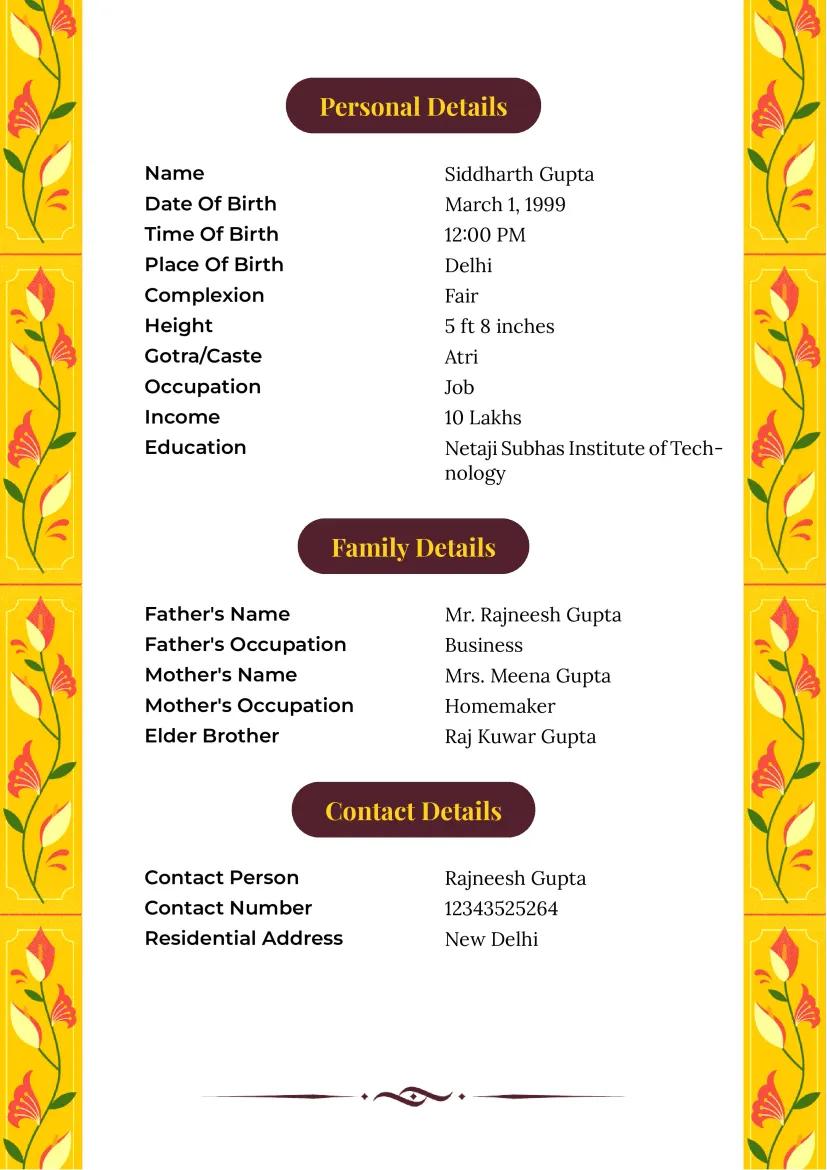
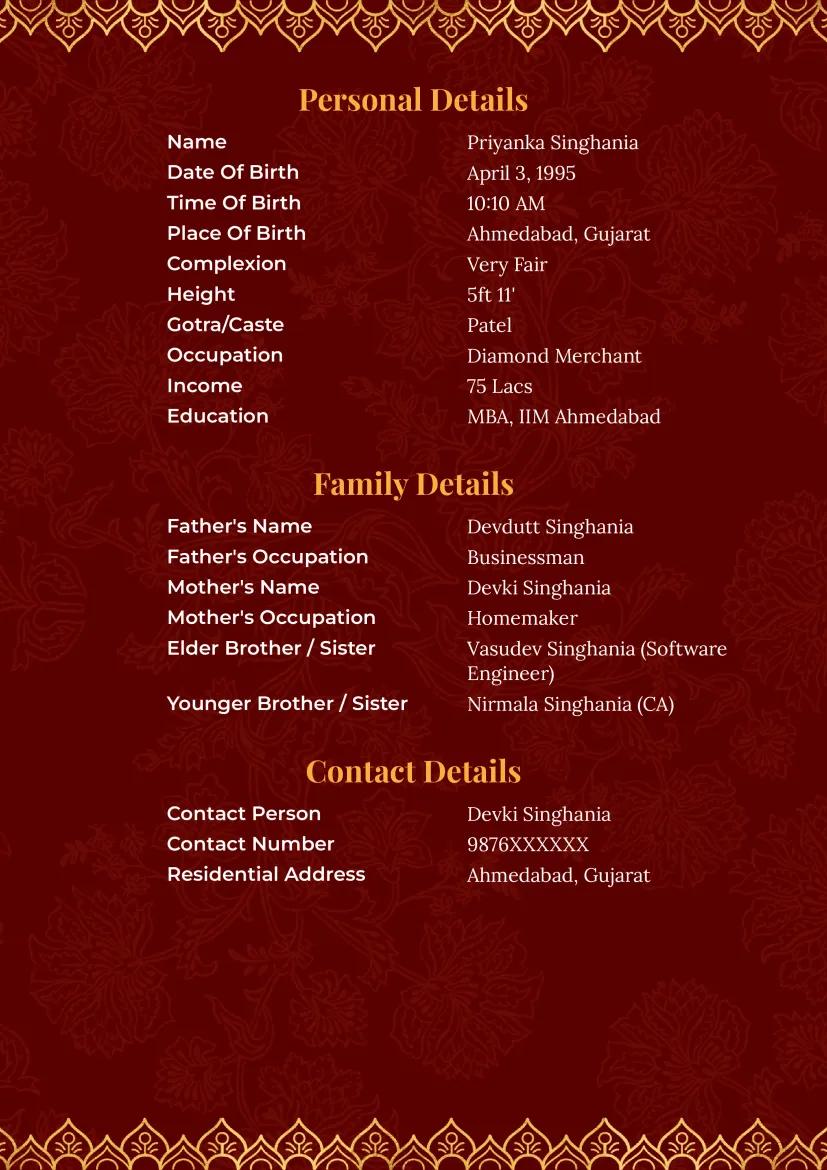
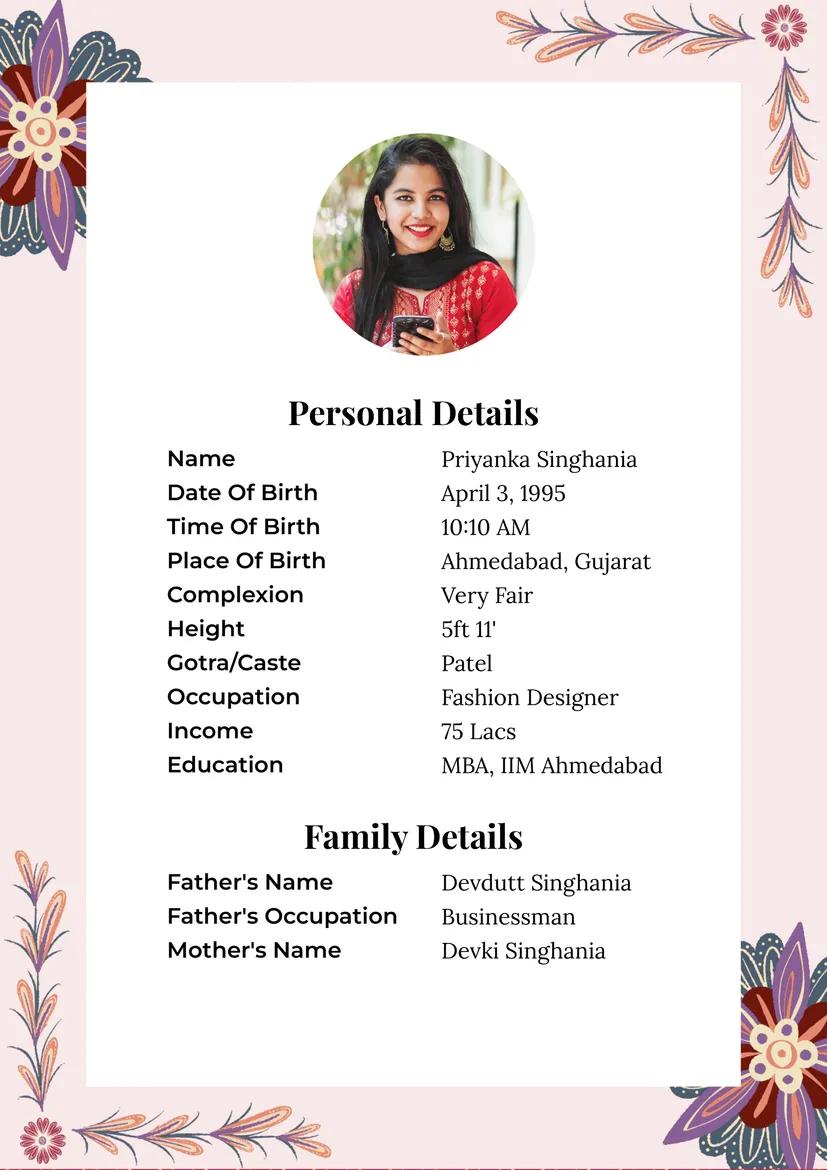
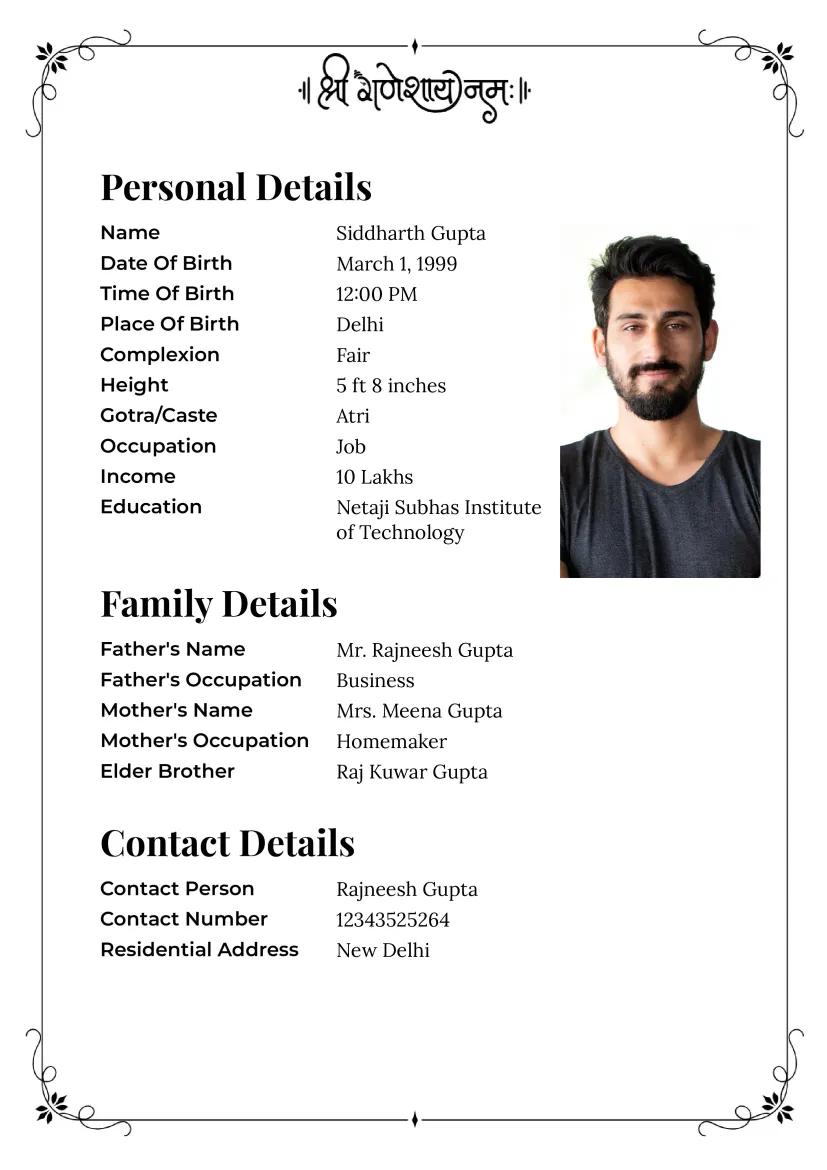
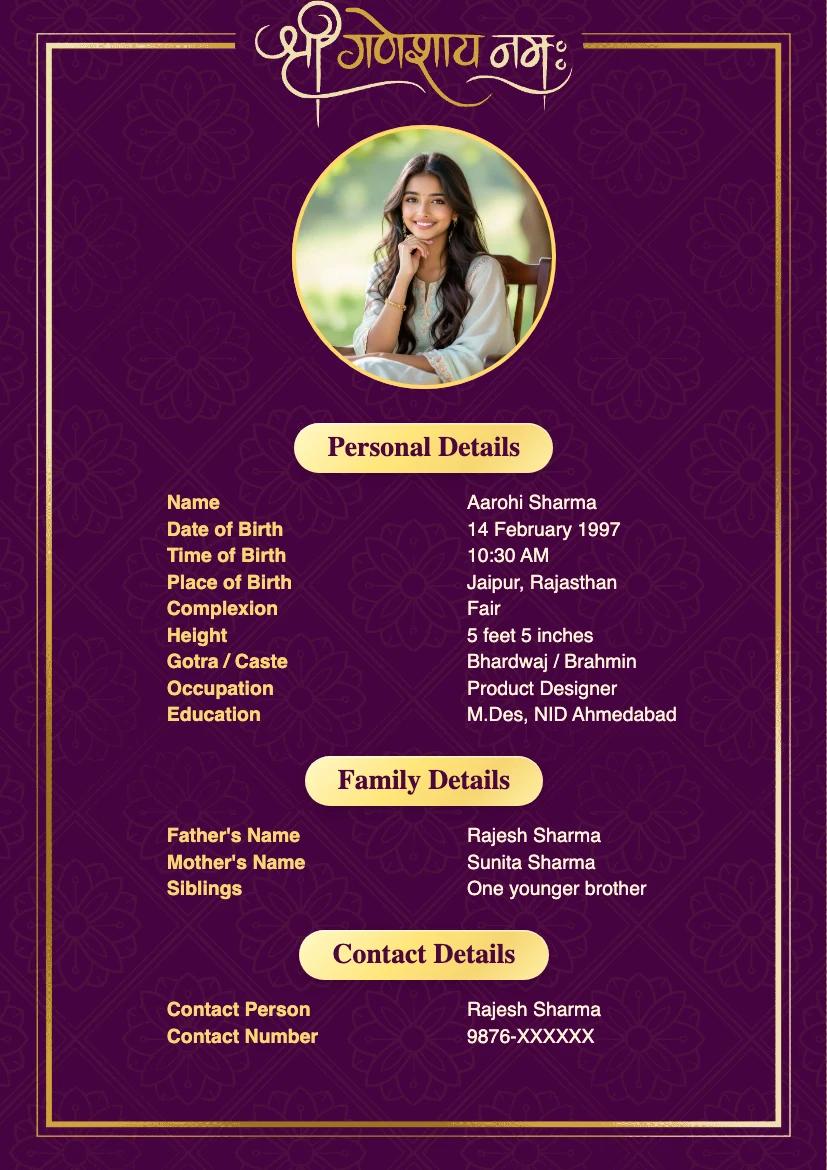
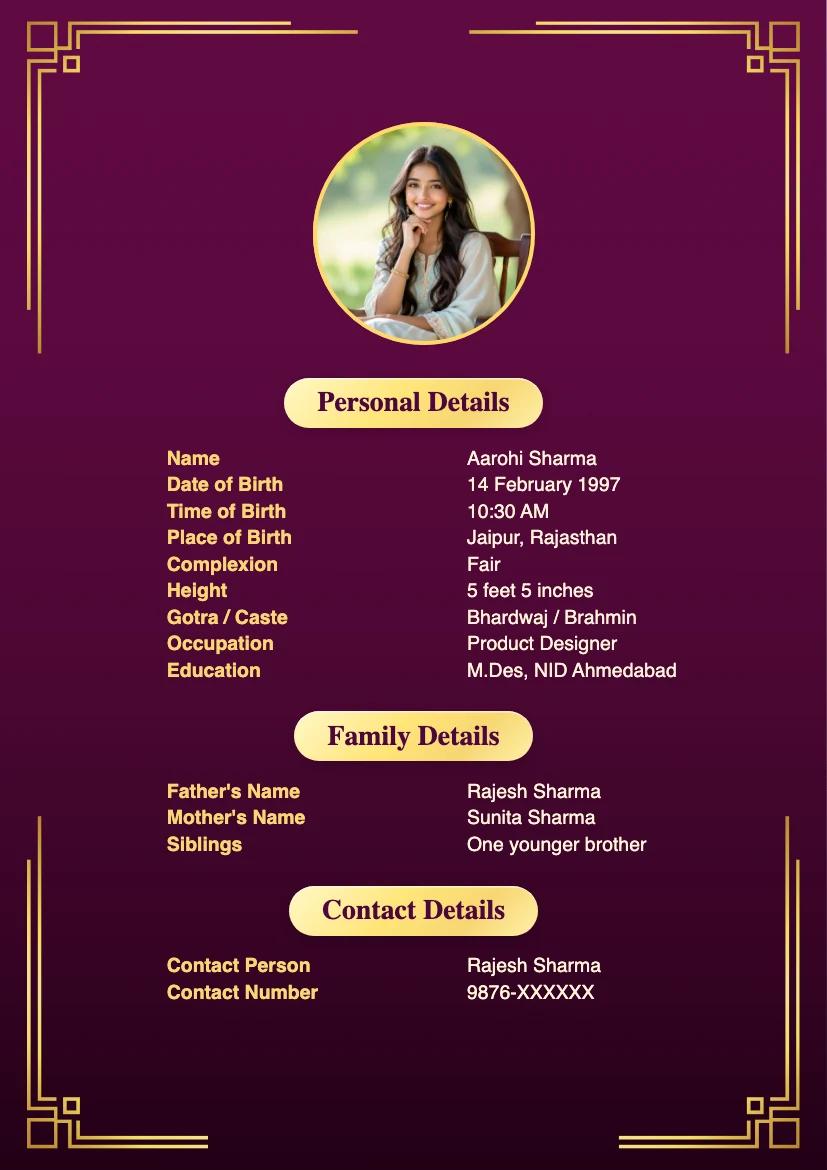
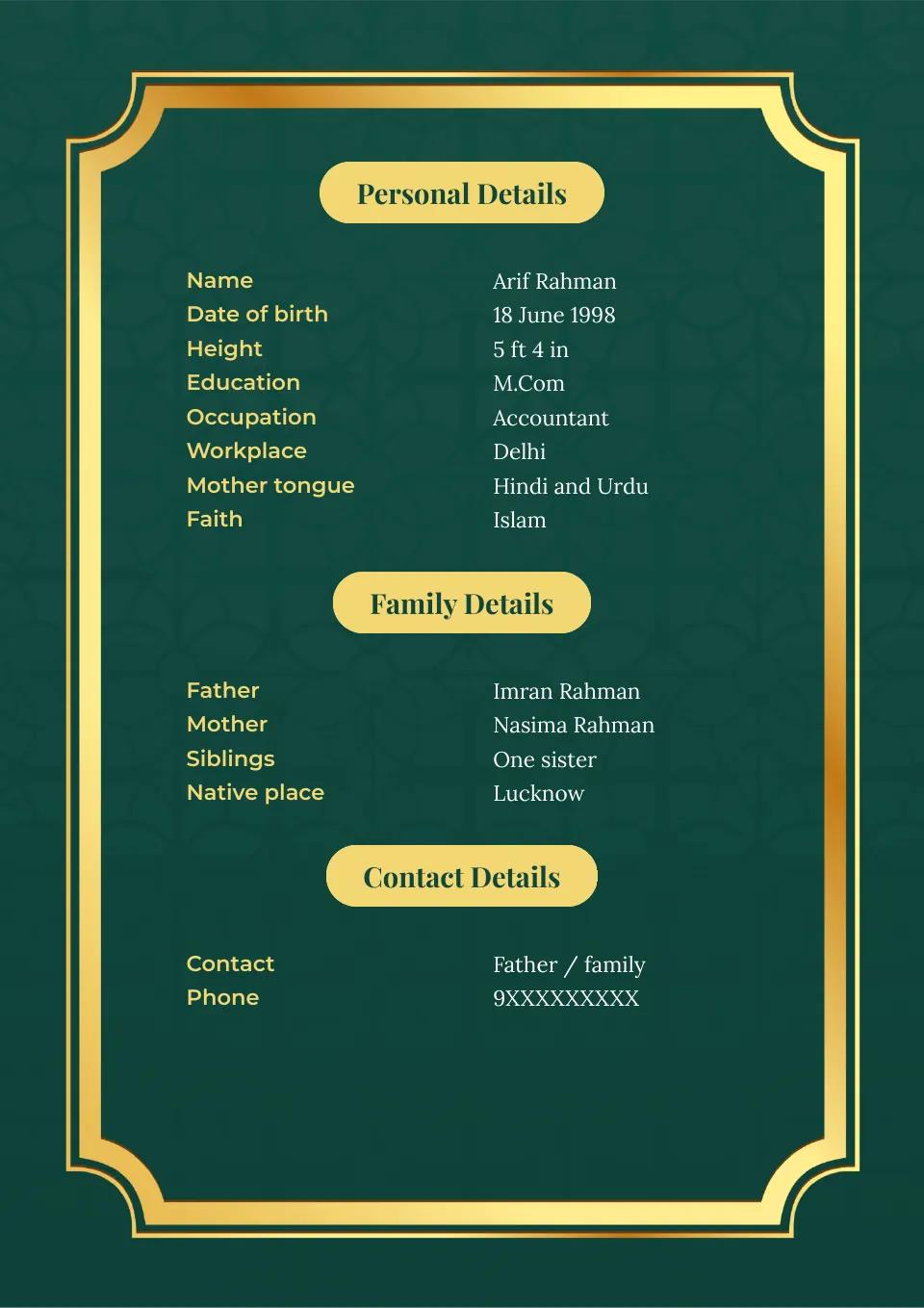
Use it when introducing someone to a possible partner or family. A short account of the person's current life, work and family is more useful than a list of achievements. See which details to include.
Job resume
Use it for a job or internship. Focus on relevant experience and skills; family details belong elsewhere.
Academic CV
Use it when a university or research role asks for a fuller record of study, publications and projects.
If you already have a resume
You can reuse accurate facts such as education and current work. Then write a fresh introduction, add only family context the person approves, and check that the contact is one they want to share. The layout should be easy to read on a phone.
Questions people ask
Can I adapt my resume?
Yes. Reuse facts, but change the order and remove work history that does not help a first conversation.
Is a photo necessary?
No. Include one only if the person wants it shared.
What if someone asks for a “marriage resume”?
They usually mean a marriage biodata. Ask if they need any particular details before sending it.
Before you send it
Read the page once with the person it describes. If they want a different layout, compare these biodata formats.