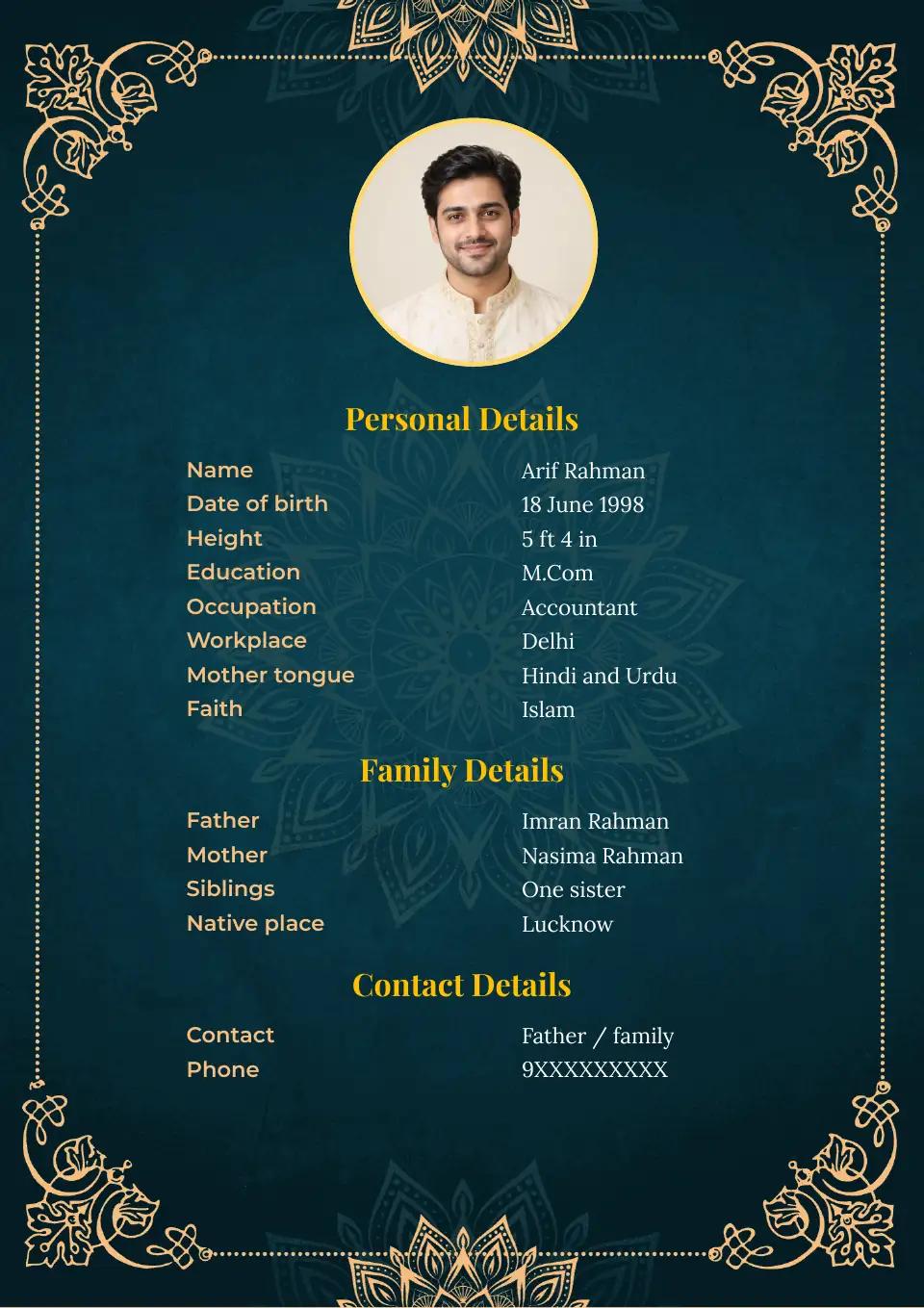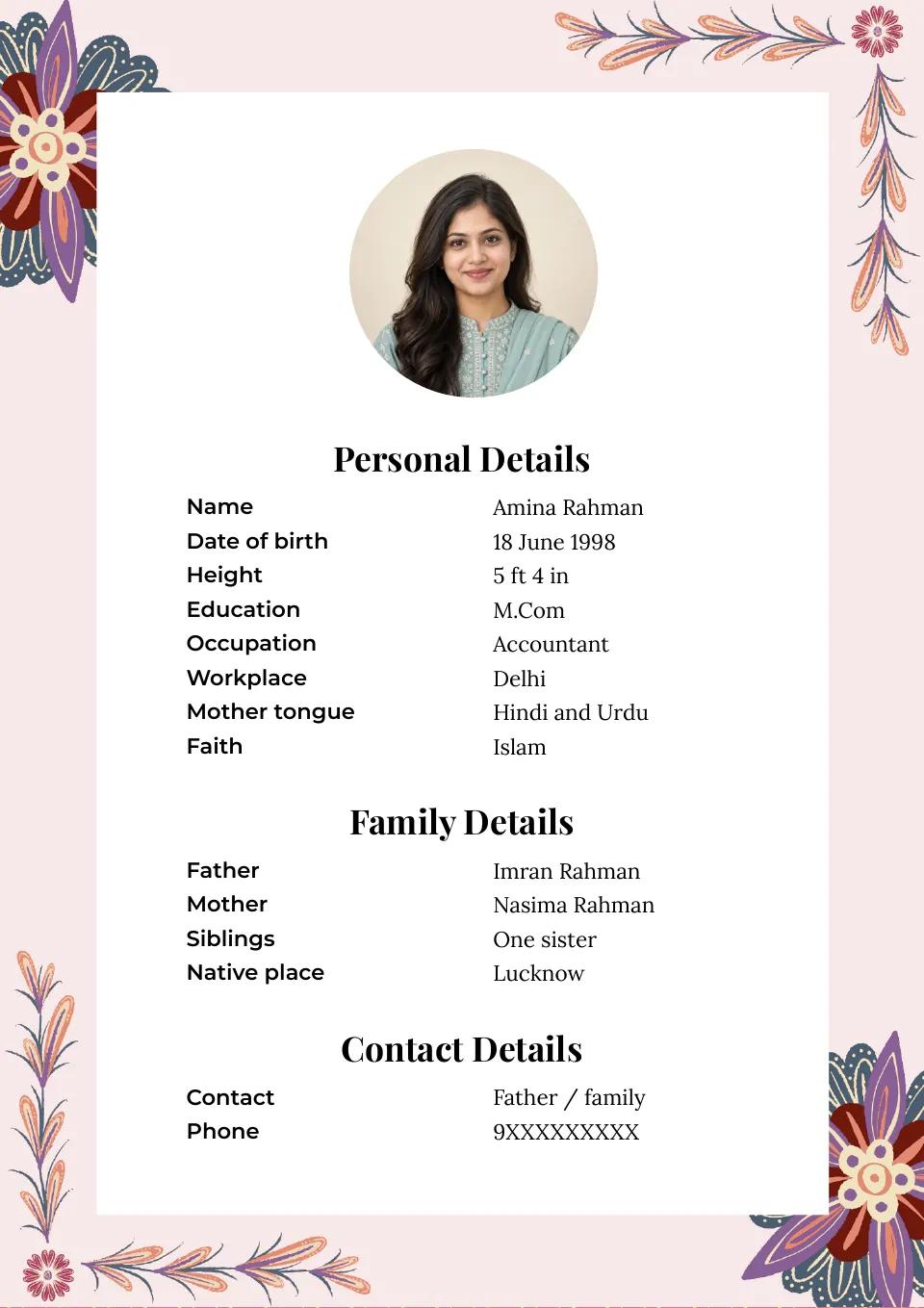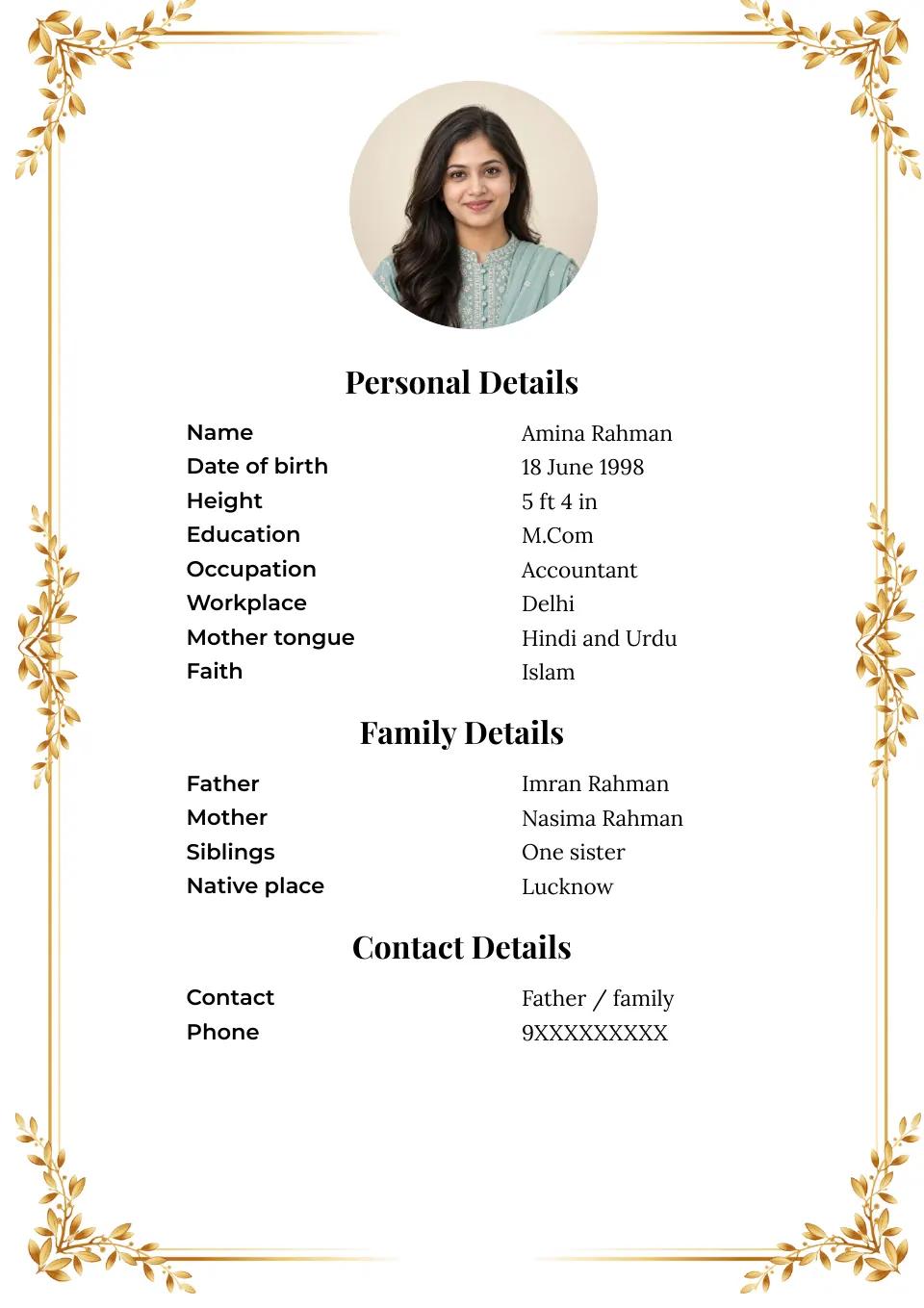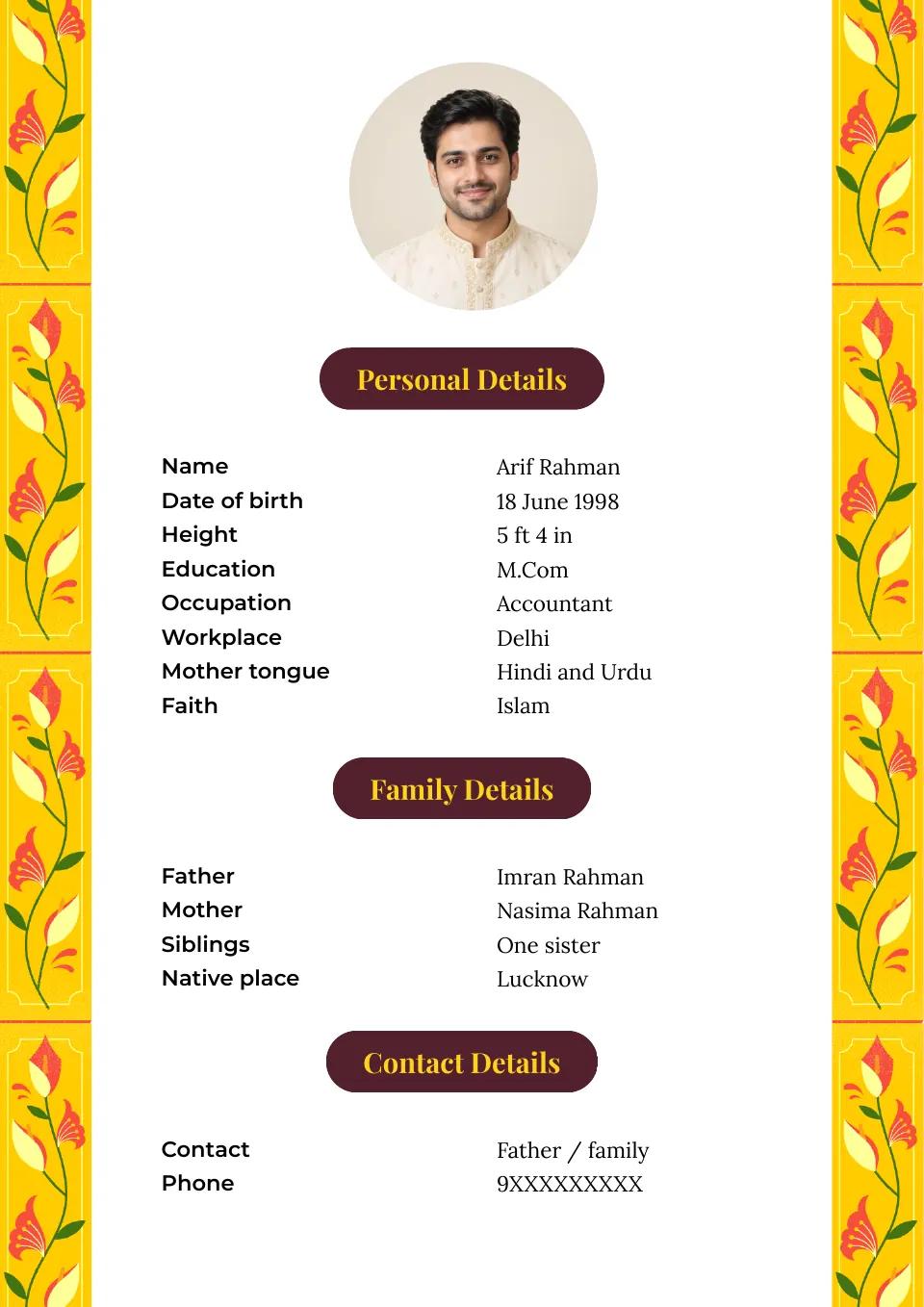
By MarriageBiodata.App English Editorial TeamPublished
How to write a Shia Muslim marriage biodata
Your Shia Muslim marriage biodata should introduce your current life clearly: your name, city, education, work, family context, optional Shia identity details, expectations and one approved contact. If your branch, religious practice or community institution matters to you, write it in your own words. A first biodata should open a respectful conversation, not settle every nikah or family decision on one page.
For the basic Muslim biodata structure, you can also read the general Muslim marriage biodata guide. This guide focuses on Shia wording, privacy and what to keep for a private discussion.
Nikah and private religious details
In a Shia nikah, consent matters. Questions about guardians, witnesses, mahr and contract terms can depend on your Shia tradition, family practice and local legal context. Keep those details for a direct conversation with the people involved. If needed, speak with a qualified religious or legal adviser rather than writing one rule into a public biodata.
Some Shia legal traditions recognize a separate temporary marriage contract. Do not use that term as a casual way to describe getting to know someone, and do not add it as a standard biodata field. If the type of marriage needs clarification, discuss it privately and respectfully.
What Shia identity details should you ask at home?
Before you add religious or community details, ask what you actually use at home and what you are comfortable sharing. The safest rule is simple: write only the identity you would say in a real family conversation.
- Branch or tradition: Ask whether you should write Shia, Ithna Ashari or Twelver, Nizari Ismaili, Dawoodi Bohra or another Shia tradition. Do not use these names as substitutes for each other, and do not infer a branch from surname, dress, language or city.
- Religious leadership or institution: If you are Twelver, ask whether mentioning a marja is relevant. If you are Ismaili or Bohra, ask which community terms or institutions your family uses. Add these details only when they help explain an important preference.
- Practice note: Decide whether a short line about Muharram majlis, matam, ziyarat, community service or another practice belongs in your first biodata. Keep it truthful and brief.
- Family wording: If your family is helping, agree on the exact words before sharing the PDF. You should not publish a branch, practice, photo or family description that the people concerned have not approved.
- Private conversation: Leave mahr, nikah arrangements, detailed religious compatibility questions and contract terms for a conversation with the people involved.
Anatomy of a Shia Muslim marriage biodata that gets a response
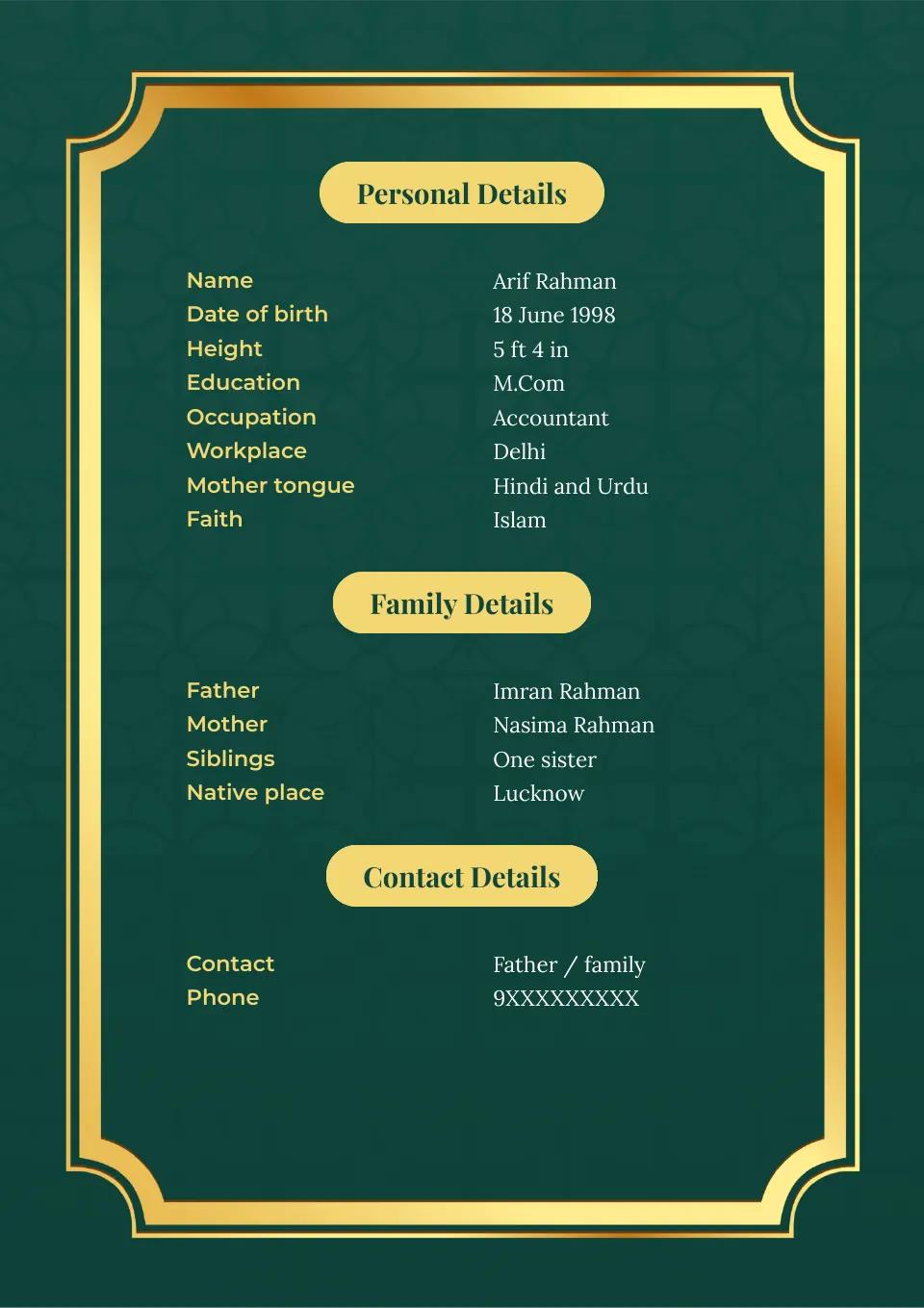
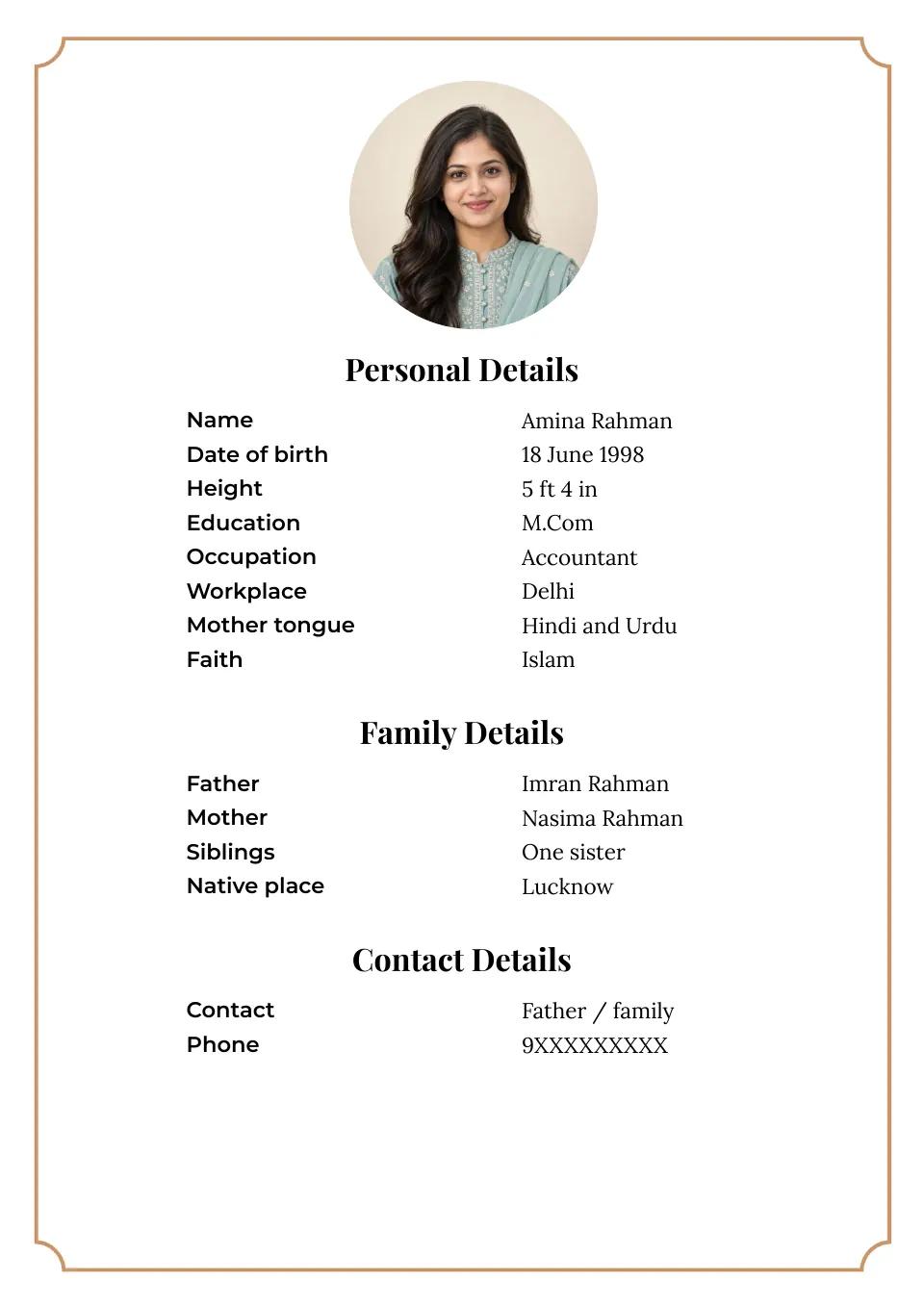
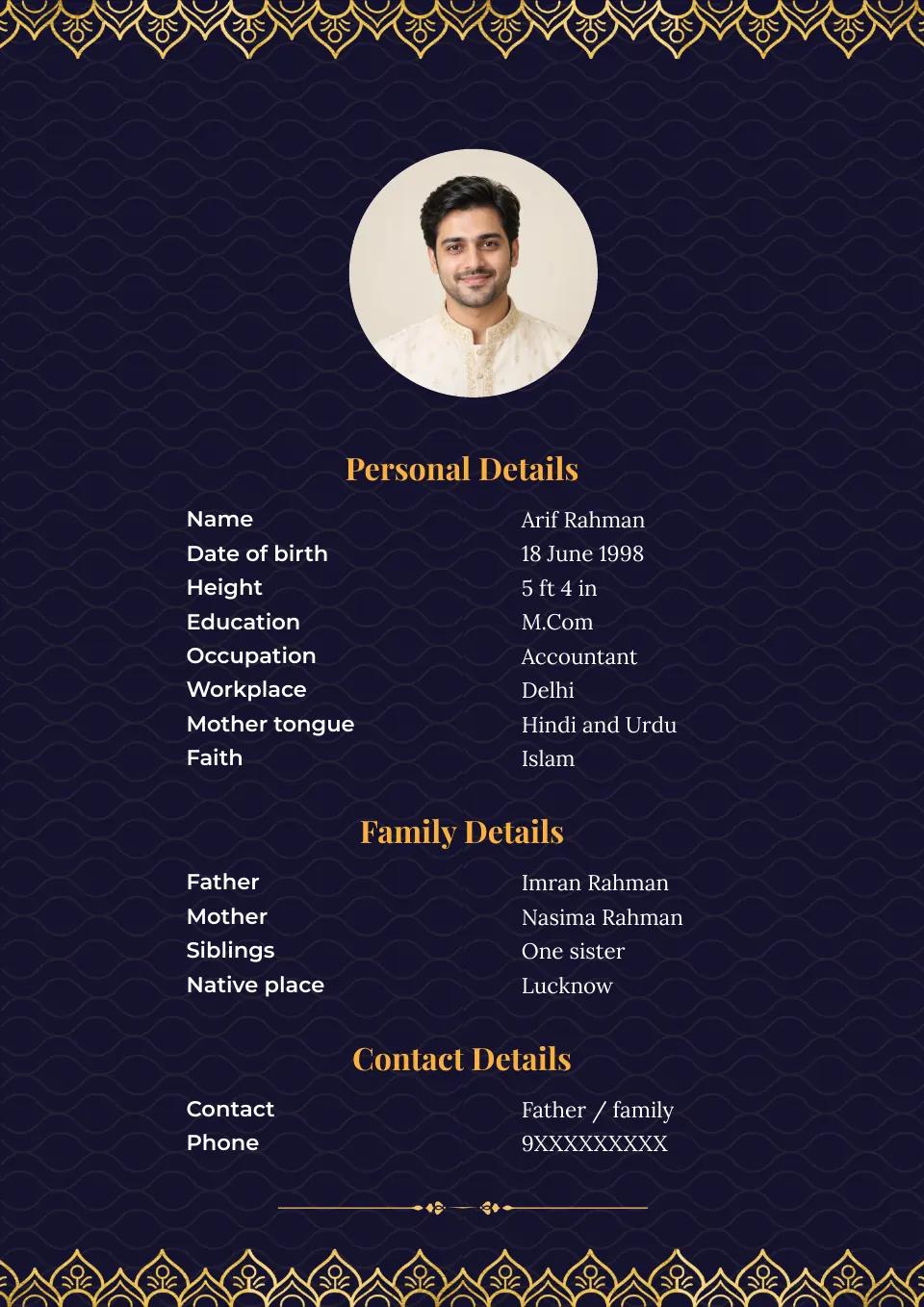
The annotated example below is fictional. It shows one Ithna Ashari or Twelver profile with optional Muharram and marja details, because that is how this fictional profile describes the practice. Your biodata may use fewer religious details, different community wording or no branch label on the first page. The contact number is masked.
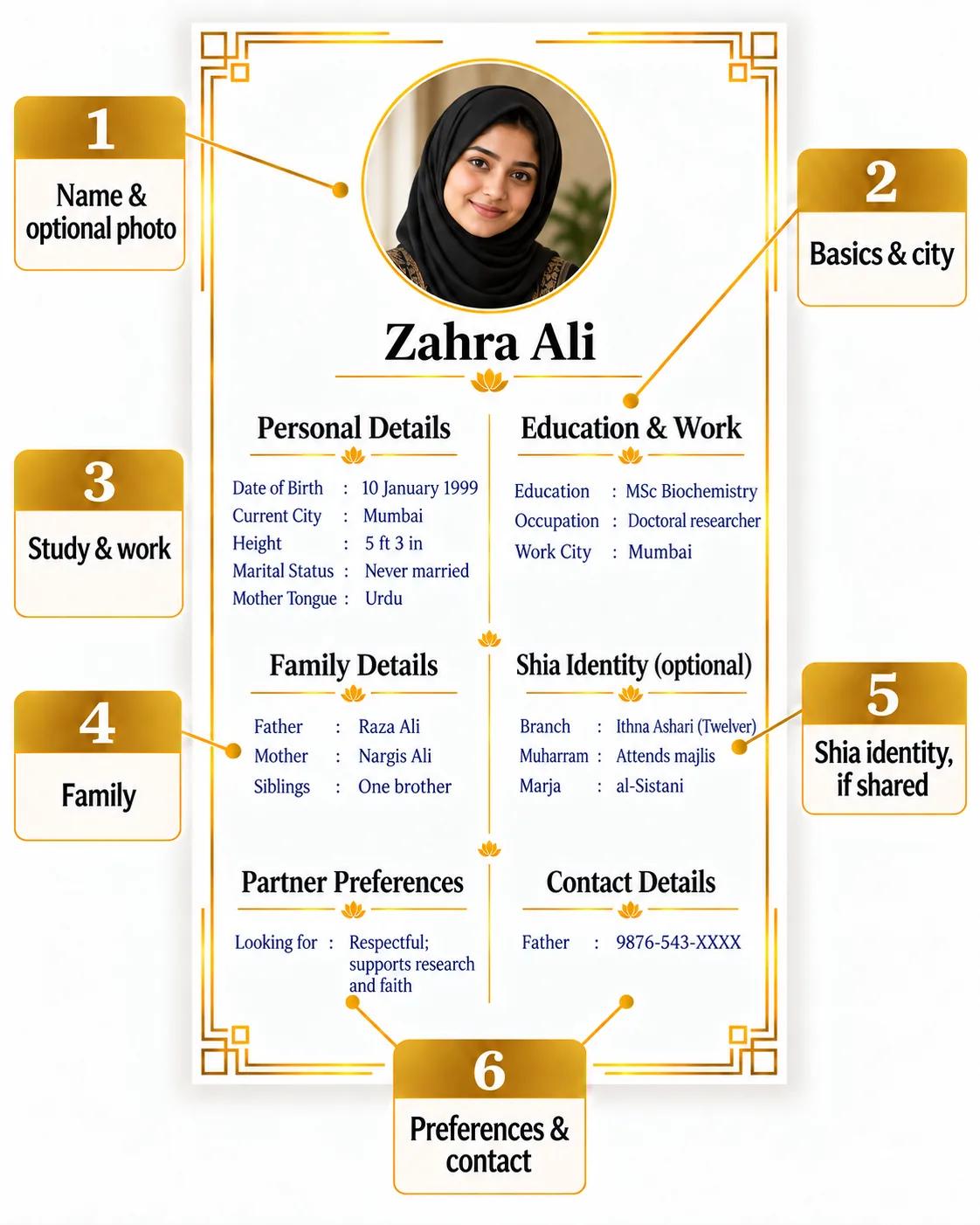
1. Lead with your name and optional photo
Put your preferred name at the top. Add a recent, clear photo only if you are comfortable sharing one. A photo can help start a positive first conversation, but it is not proof of your Shia identity or a requirement for a first introduction.
2. Give your basic details without oversharing
Write your date of birth or age, current city, height, marital status and language. A city is usually enough for a first PDF. Keep your full address, identity documents and unapproved personal numbers out of a file that may be forwarded.
3. Describe your education and work plainly
List your highest qualification, current role or field, and work city. If further study, relocation or work after marriage matters to you, add one clear sentence. Skip exaggerated claims and long credential lists.
4. Add family context with consent
Introduce parents or guardians and siblings in a line or two. Agree on what you share about them. Income, property, relatives' private numbers and details they have not approved should stay out of the first biodata.
5. Name your Shia tradition accurately
If you want to share it, use your own branch or tradition name. In a Twelver profile, you may mention a marja, Muharram majlis or ziyarat if these are meaningful to you. Ismaili, Bohra and other Shia families may use different words and institutions. Do not copy one sample into another community's biodata.
6. End with preferences and one contact
Write a few respectful preferences about values, location, work or family expectations. Then add one approved contact who expects enquiries. A short, specific line is easier to answer than a long list of demands.
Mistakes to avoid
- Treating all Shia families as the same. Ithna Ashari, Ismaili, Dawoodi Bohra and other Shia identities are not interchangeable.
- Turning religious practice into a test. Mention majlis, marja, ziyarat or community service only if it is part of your life and you want to share it.
- Copying fields that do not fit you. Remove astrology, complexion, long religious questionnaires or any field your family does not use.
- Oversharing private information. Do not publish your full address, identity numbers, financial records, relatives' private contact details or unapproved photos.
- Writing rigid or disrespectful expectations. Focus on values, life plans and practical compatibility instead of appearance, status or dowry demands.
- Forgetting to check the PDF on a phone. Names, dates, branch wording, image crop and contact details should be readable before you forward it.
Check your biodata before sharing it
- Check your preferred name, date of birth or age, city and contact details.
- Confirm your education, work and future plans are current.
- Ask your family to approve the family details you included.
- Write your Shia branch or tradition in your own words, if you choose to include it.
- Verify any optional practice note, such as Muharram majlis, marja, ziyarat or community service.
- Add a recent, clear photo only if you are comfortable sharing one.
- Remove full addresses, identity documents, financial records and unapproved contact details.
You can create a Muslim marriage biodata once the wording is ready. Keep the first PDF clear; the next conversation can handle the sensitive details.
Frequently asked questions
Should I mention my Shia branch in my marriage biodata?
Mention it only if you use that identity and want it known in the first introduction. Write the exact wording you use at home, such as Ithna Ashari, Twelver, Nizari Ismaili or Dawoodi Bohra. Do not guess from surname, city, language or dress.
Should I add a photo to my Shia Muslim marriage biodata?
A photo is optional. If you are comfortable sharing one, a recent and clear photo can improve the chance of a positive first conversation. Agree on it with your family if they are helping prepare the biodata.
Should I write mahr or nikah expectations in my biodata?
Keep detailed mahr, nikah and contract expectations for a direct conversation with the people involved. If one preference needs to be known from the start, write it briefly and respectfully.
What contact details should I share in my first PDF?
Share your city and one approved contact who expects replies. Keep your full address, identity numbers and financial records for later trusted conversations.
For the terminology used above, see the Ismaili community's own overview, the Dawoodi Bohra community's own overview and this explanation of marja and taqlid in Twelver practice.