By MarriageBiodata.App English Editorial TeamPublished
How to Write a Jain Marriage Biodata
A Jain marriage biodata should introduce a person clearly, then state the faith and everyday practices they choose to share. Start with their name, age or date of birth, city, education, work and one approved contact. Add tradition, community, diet and family details only after asking the person how they describe them. A surname cannot answer those questions.
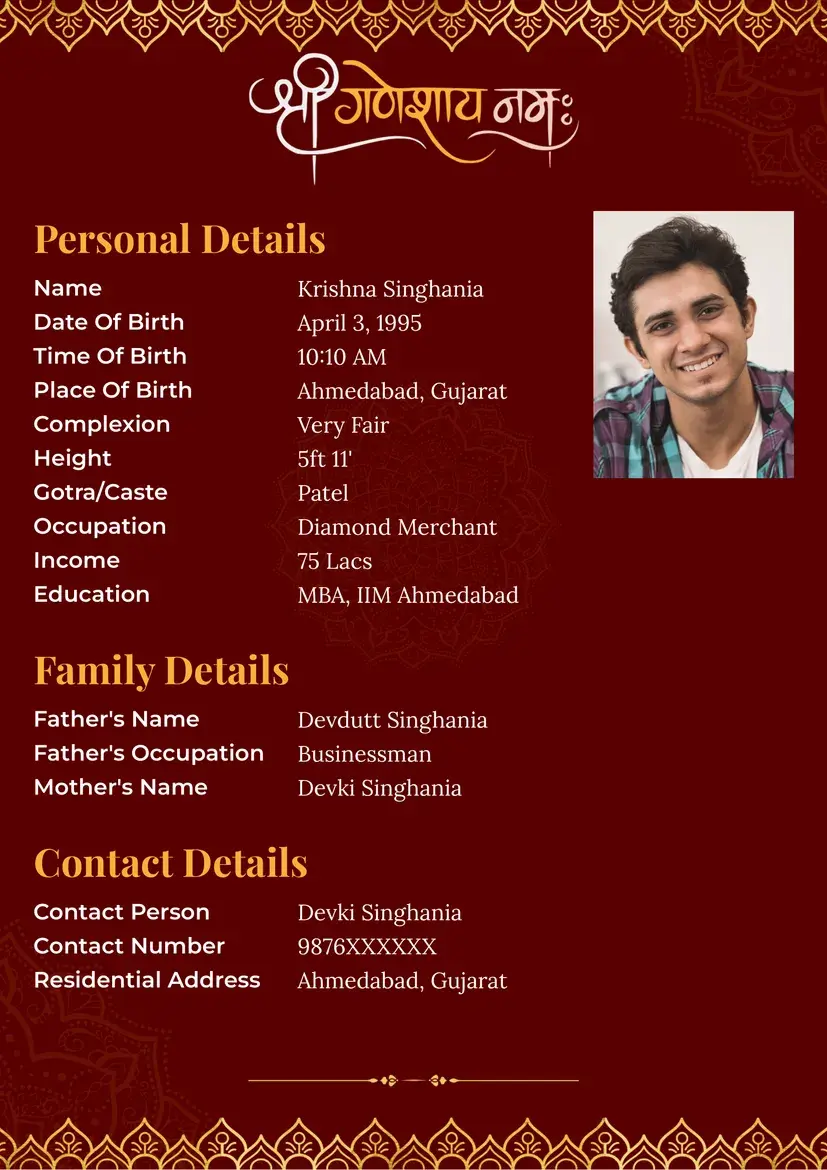
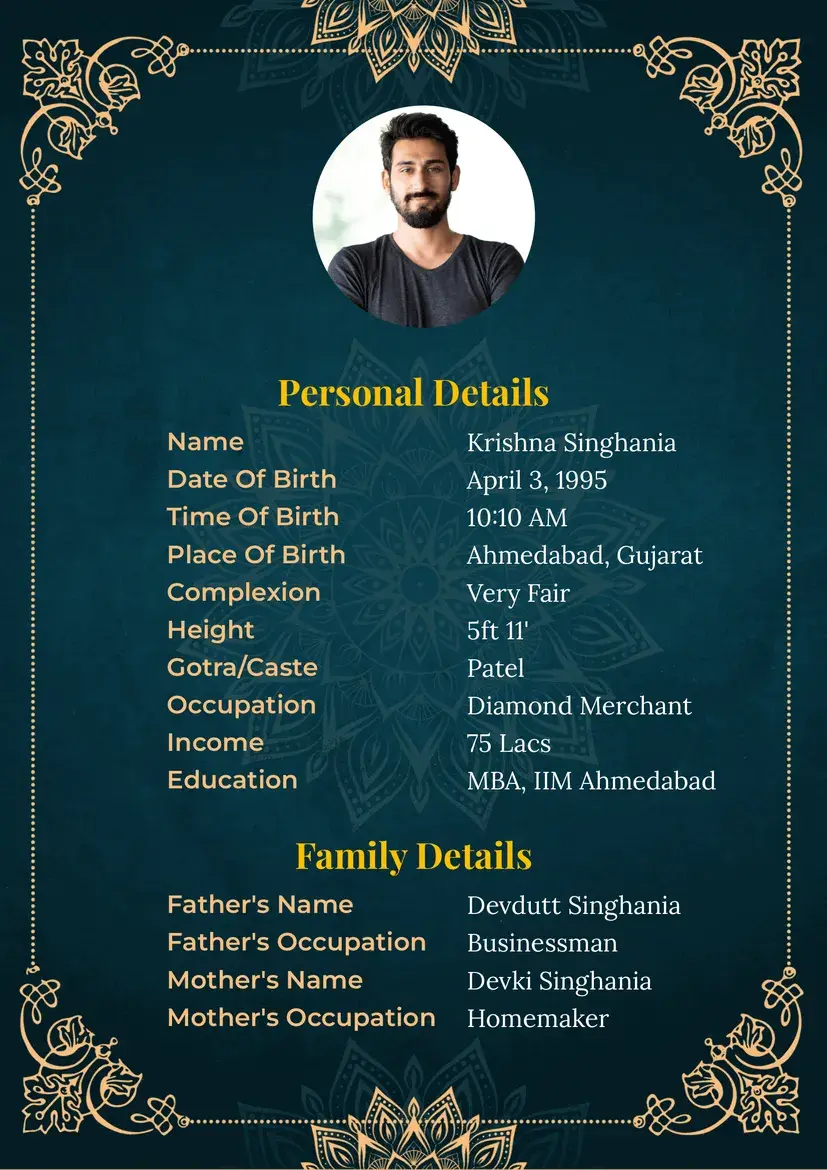
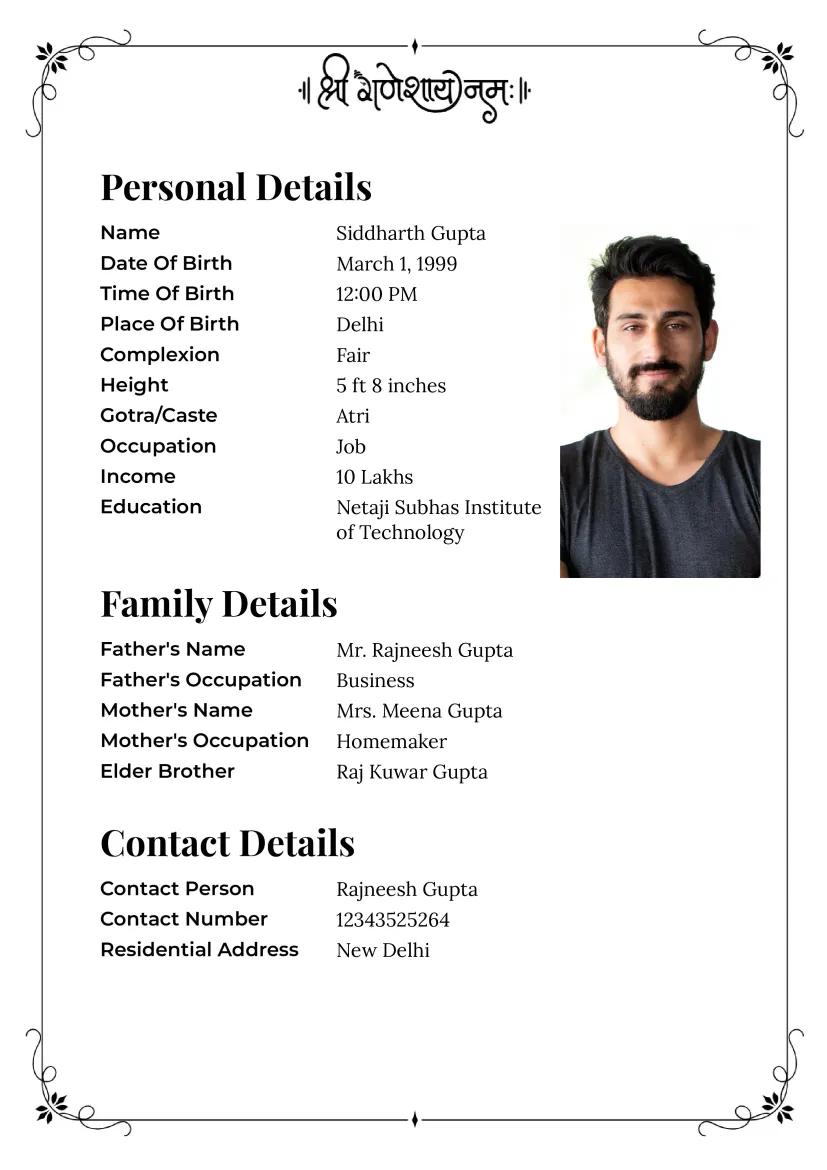
Anatomy of a Jain biodata
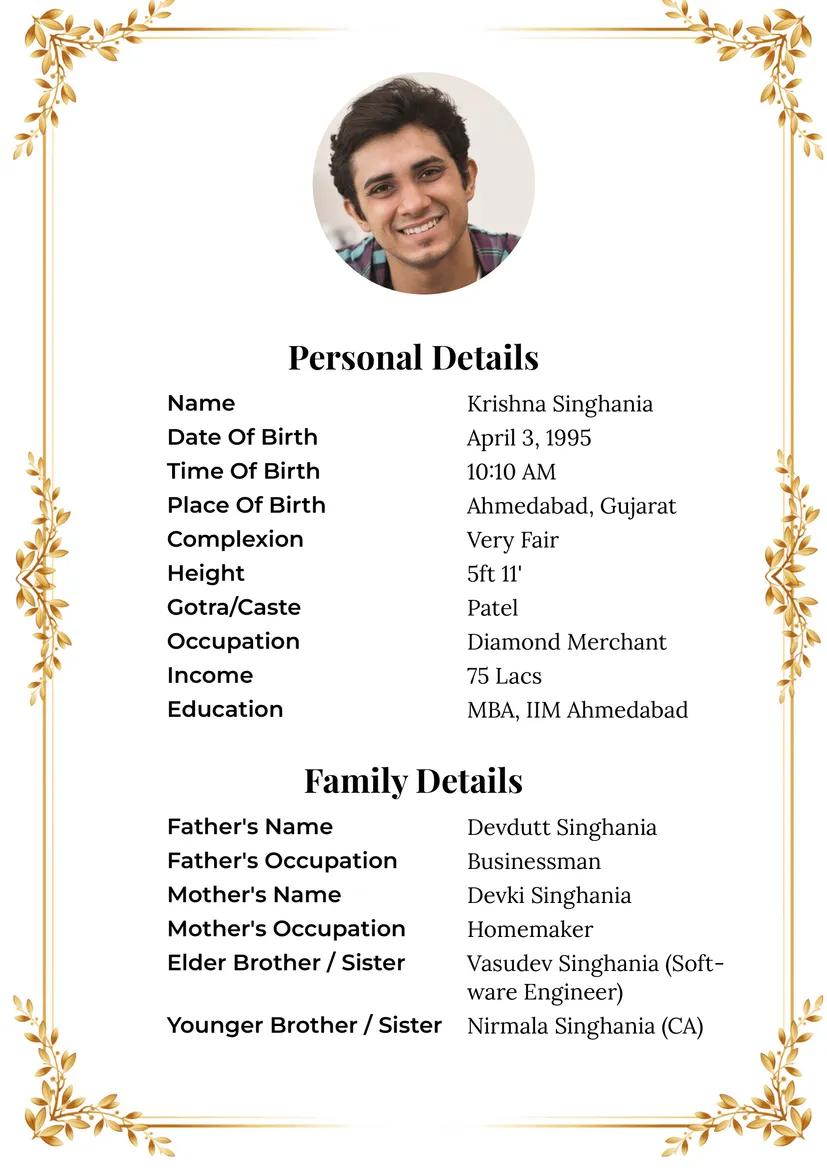
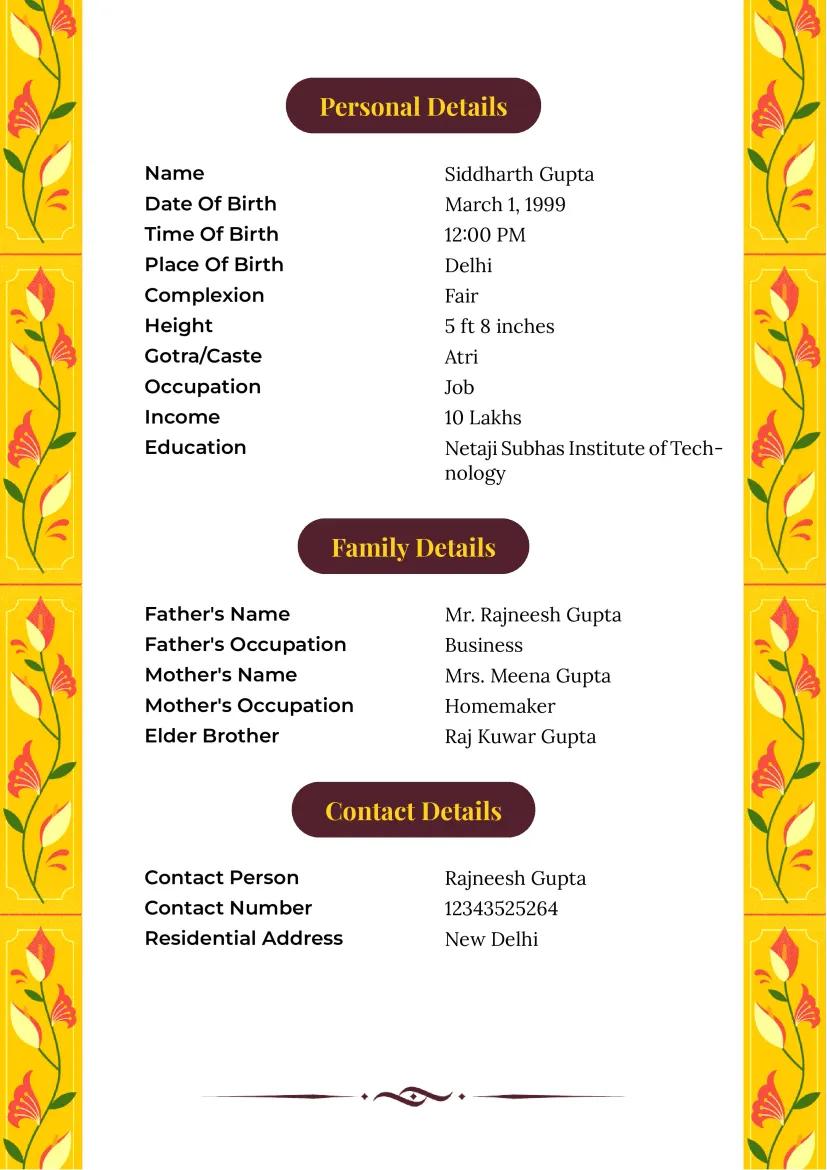
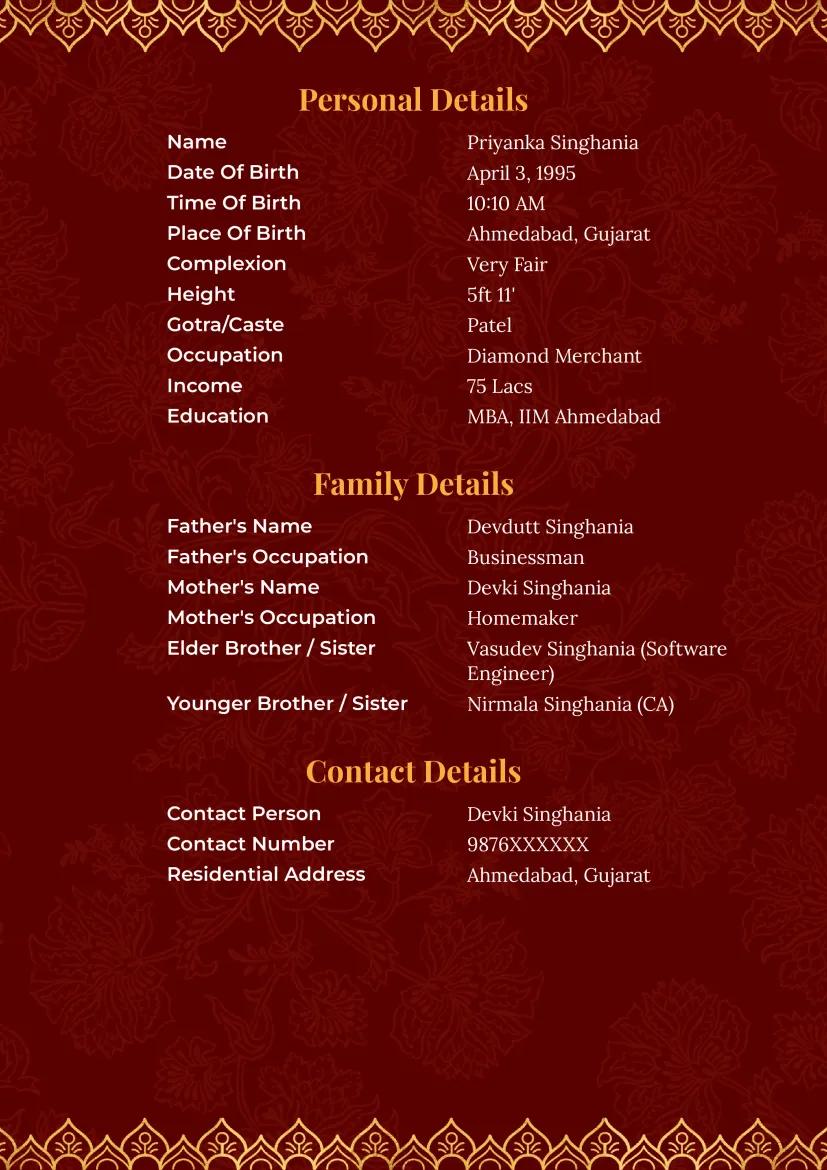
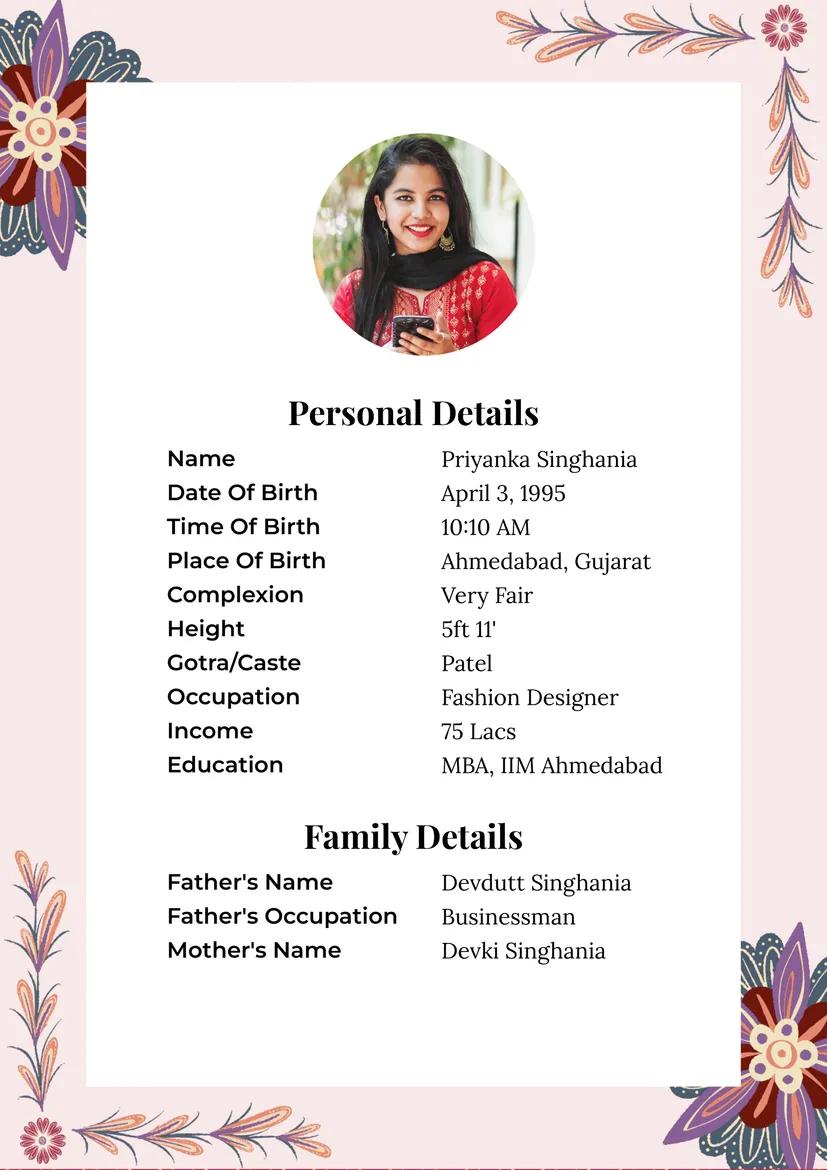
The numbered annotations in this fictional, nonidentifying example show a reading order. The fields are prompts, not a mandatory form; the person may omit any optional field.
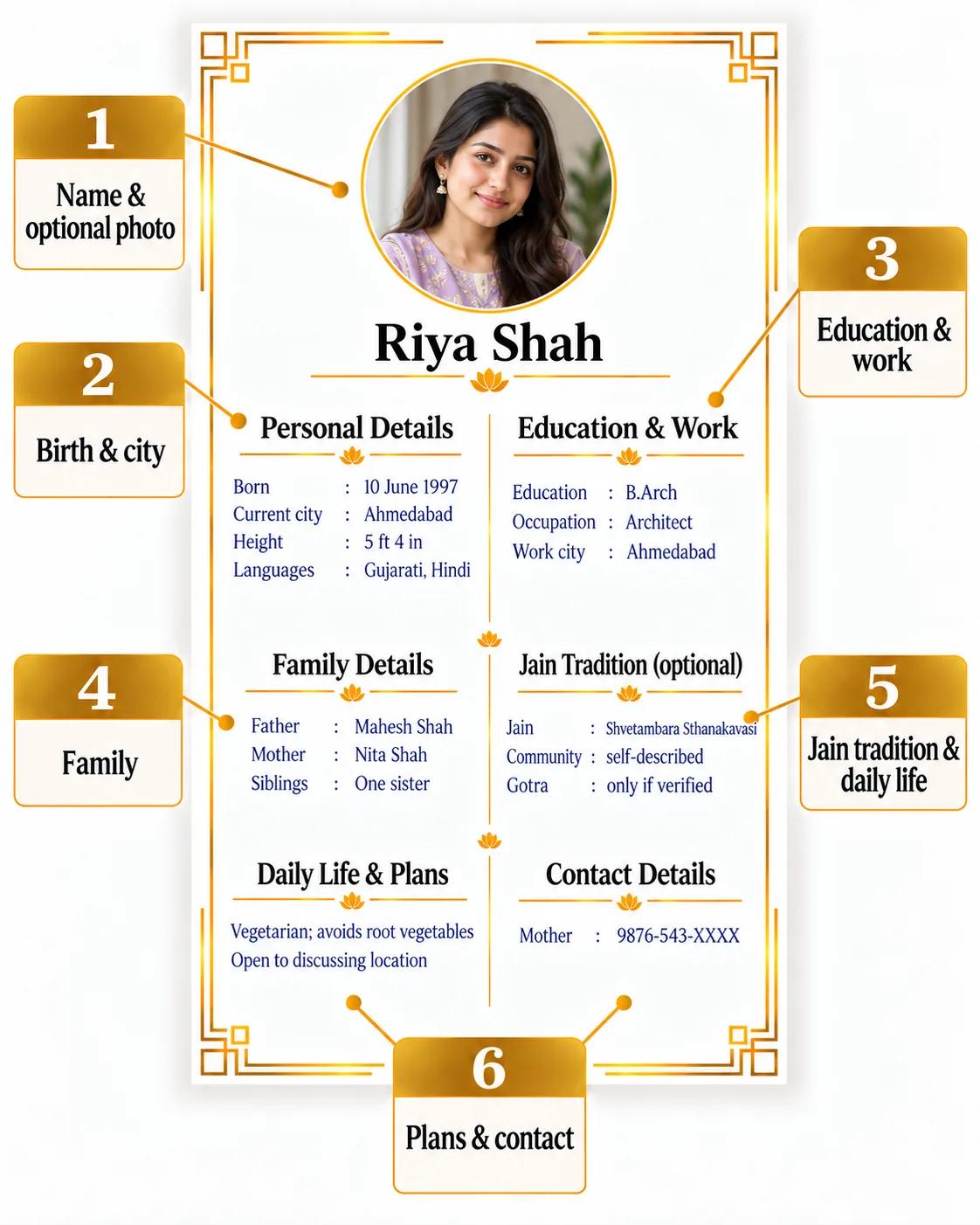
- Name and optional photo: Use the name the person wants shown. Add one recent photo only with permission.
- Birth and location: Date of birth or age, height if useful, current city and actual mother tongue. Birth time and place can wait until both sides want them.
- Faith and community: Write “Jain” and, if the person wishes, their precise tradition or community. Keep these as separate labels. Confirm gotra rather than deriving it from a surname.
- Education and work: State the highest qualification, current role or study plan and work city. “Software engineer in Pune” is clearer than “well settled.”
- Daily life and family: Give one line on dietary practice and one on parents, siblings or family roots if they agree. State a personal practice, not a rule for all Jains.
- Contact and preferences: Offer one approved phone or email and two or three practical expectations, such as location or willingness to relocate. Avoid a list of demands.
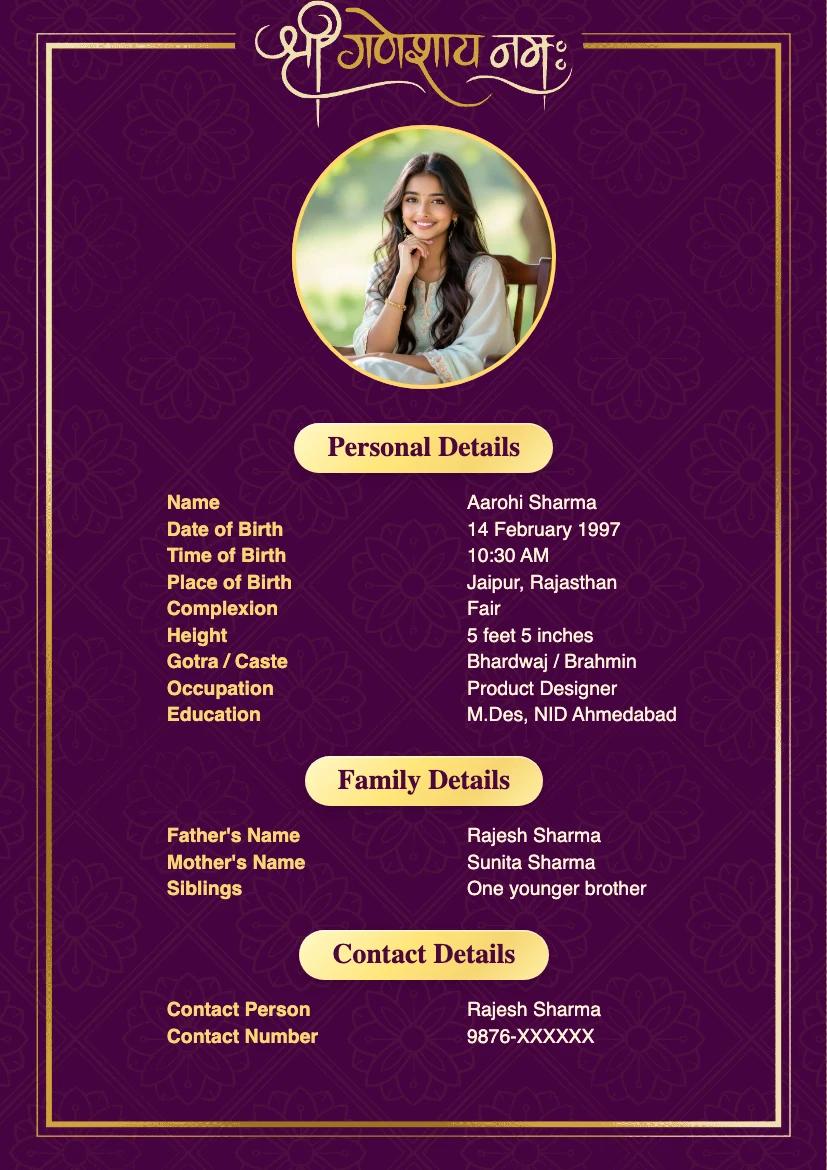
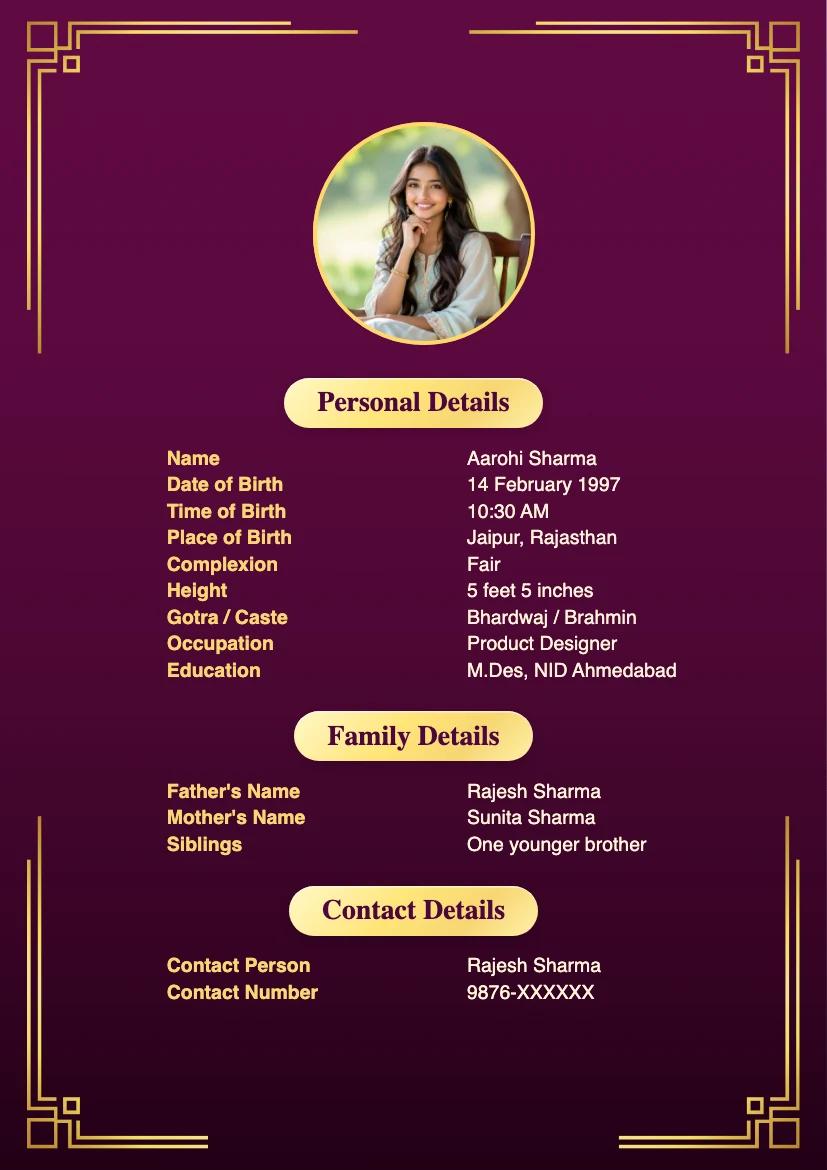
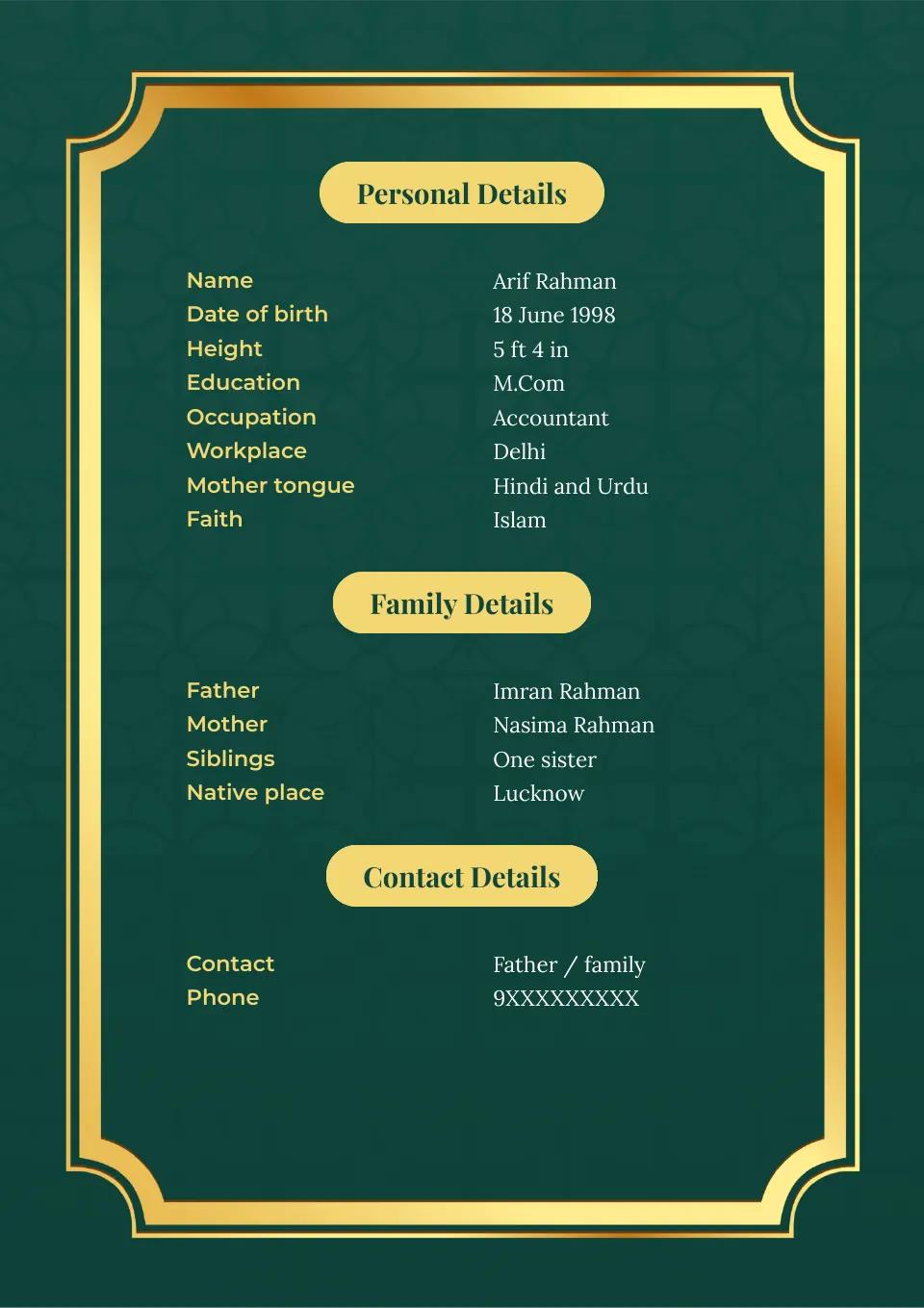
Save an editable copy for corrections, then share a PDF after checking it on a phone. The image shows placement; it does not imply that a Jain biodata needs religious symbols or a particular colour.
Community and language examples
Use the examples below only when the person identifies this way. Community names, sects and home languages describe different things.
| Situation | Sample wording | Check before publishing |
|---|---|---|
| A Shvetambara person | “Jain tradition: Shvetambara Sthanakavasi; languages: Gujarati and Hindi.” | Ask which precise branch name they use. JAINpedia distinguishes Murti-pujak, Sthanakavasi and Terapanthi traditions; do not shorten one into another. |
| A Digambara person | “Jain tradition: Digambara; mother tongue: Marathi; current city: [city].” | Ask whether tradition belongs in the first introduction. Do not infer it from a Marathi name or hometown. |
| An Oswal, Porwal, Khandelwal or Agrawal Jain person | “Community: [family’s self-description]; Jain tradition: [if desired]; family roots: [town].” | Jain studies identify these as community groupings. Community and sect are separate; verify the wording and any gotra with the family. |
| A multilingual or overseas household | “At home: Gujarati and English; based in [city]; open to [location preference].” | Ask which language the person prefers for first contact and whether relocation matters. JAINA’s Jain Milan form asks about the person and future partner, showing why practical preferences can help an introduction. |
Diet needs the same care. “Vegetarian; avoids root vegetables” is useful if it describes the person’s actual practice. “Jain diet” by itself leaves a question unanswered. JAINA’s educational resources discuss dietary observances; the biodata should report the person’s own routine rather than prescribe one.
A short example you can adapt
Name: [Name] · City: [City] · Languages: [Languages used at home]
Education and work: [Degree]; [current role and city]
Faith and community: [Self-described Jain tradition and community, if wanted]
Daily life: [Dietary practice or interest the person wants to mention]
Family: [One approved sentence] · Contact: [One approved contact]
Ask the person to check every line, especially tradition, language, family details and contact. If they prefer to discuss those details later, leave them off the first PDF. A biodata editor can help arrange the approved information.
Jain biodata questions
Is a sect or community name required?
No. Add a precise, self-described name if it helps the intended readers and the person wants it shared. Jain tradition, community and gotra are different fields.
Should I mention dietary rules or fasting?
Mention a practice only if it matters to the person’s daily life or partner search. Describe what they actually do; do not assign a practice to them because they are Jain.
Do Jain biodatas need a horoscope or gotra?
Not by default. Ask whether both people want to use those details, verify them, and share them at the stage they prefer.
Can I write the biodata in Gujarati, Hindi, Marathi or English?
Yes. Use the language the person and intended reader understand best. A short bilingual version can help when families use different languages, but check every translated community term with the person.
How long should it be?
Aim for one readable page. Use a second only when the person approves additional details that genuinely help an introduction.