By MarriageBiodata.App English Editorial TeamPublished
How to Write a Marathi Biodata for Marriage
A Marathi marriage biodata (लग्नाचा बायोडाटा or परिचय पत्र) should introduce you clearly: your name, current city, education, work, a little family context, and one way to reply. Aim for a readable one-page PDF. You can share a full पत्रिका or more family detail later, if both sides want to continue the conversation.
Your family may use different community or tradition details from another Marathi-speaking family. The examples below show what you might check at home, not a ranking or a set of rules. The 2011 Census cannot verify an all-community ranking: India's Ministry of Home Affairs says it did not enumerate caste populations beyond Scheduled Castes and Scheduled Tribes. Decide with your family which details you want to share.
Anatomy of a Marathi marriage biodata that gets a response
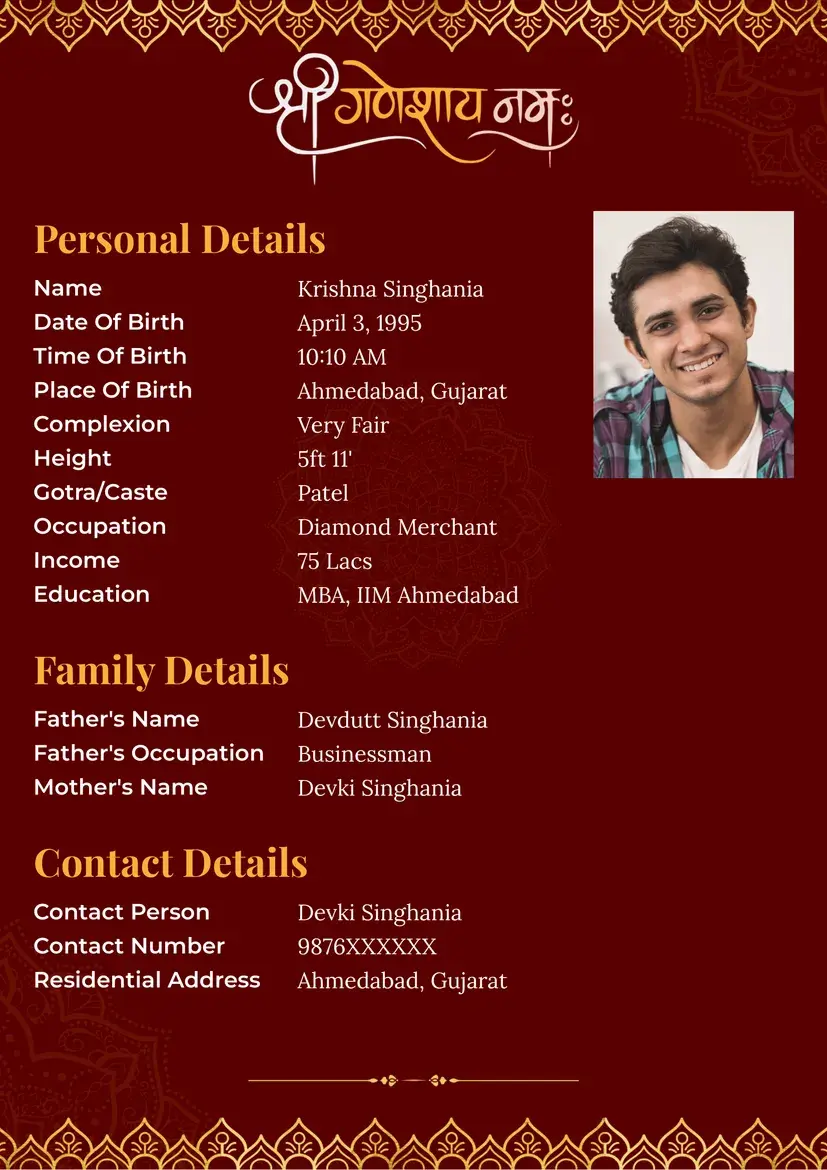
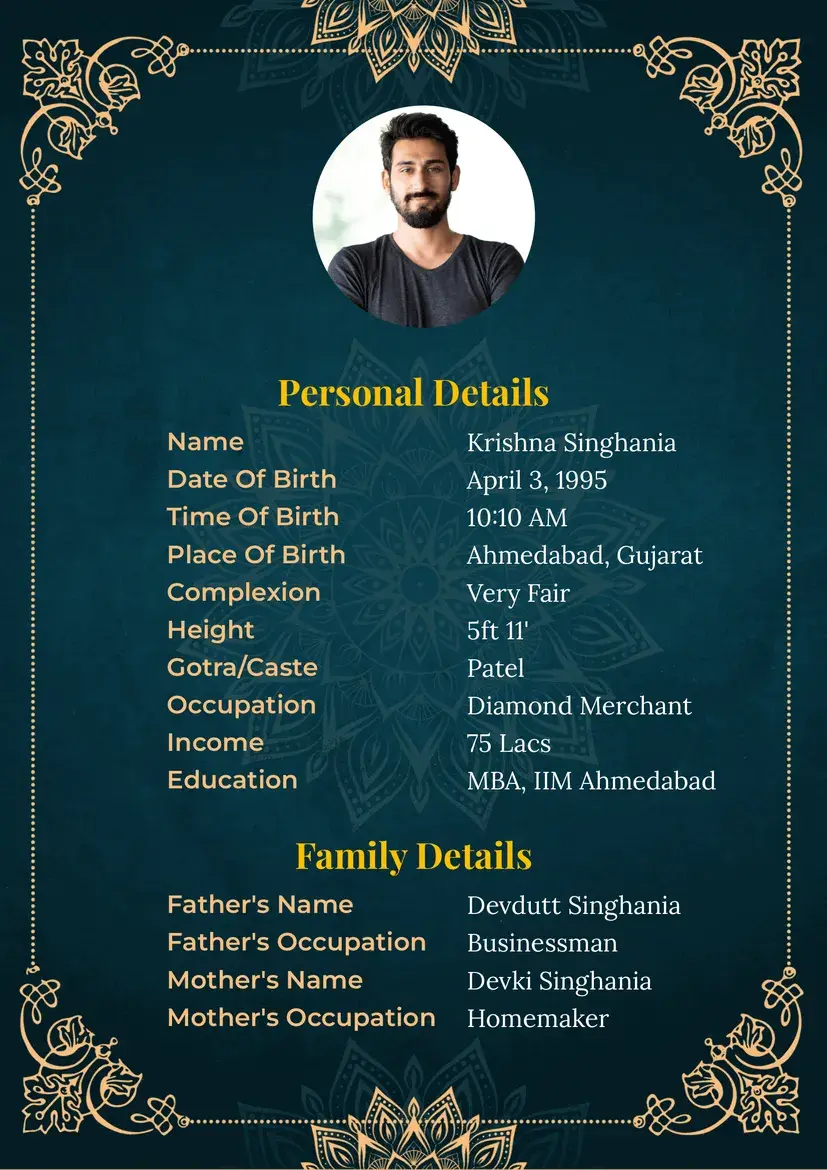
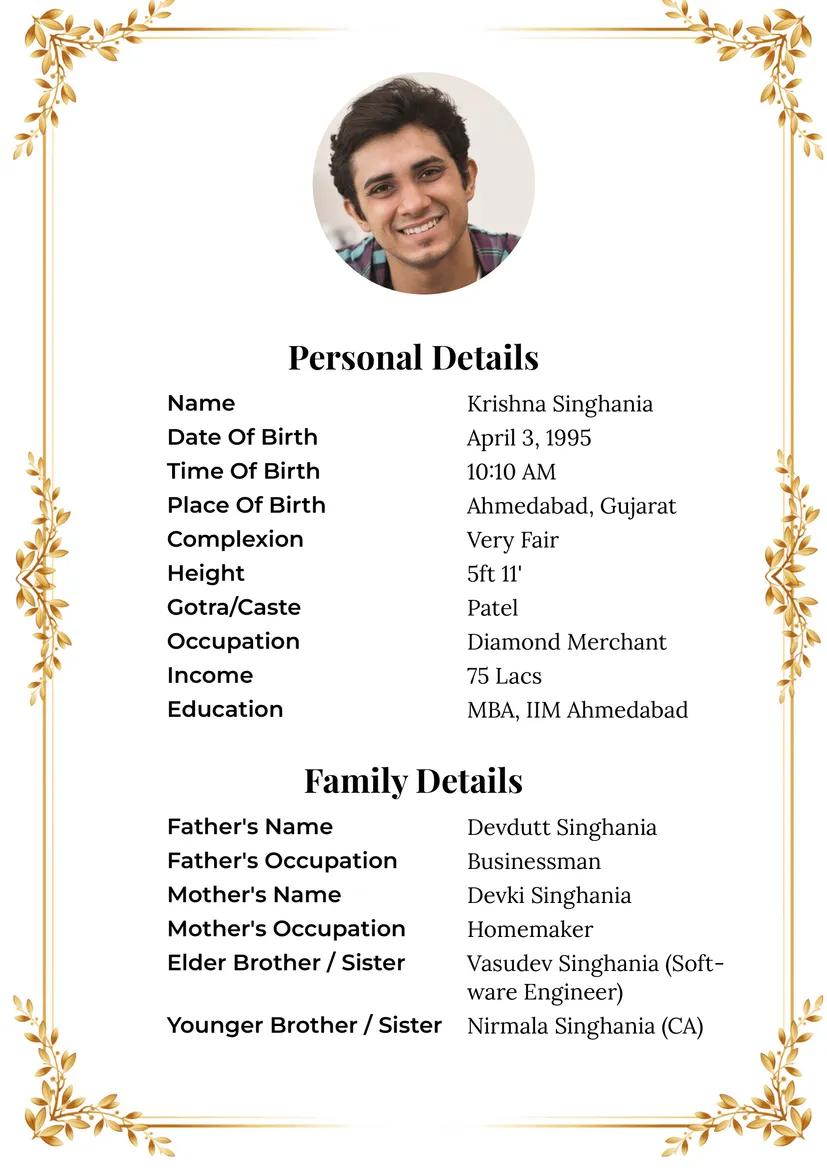
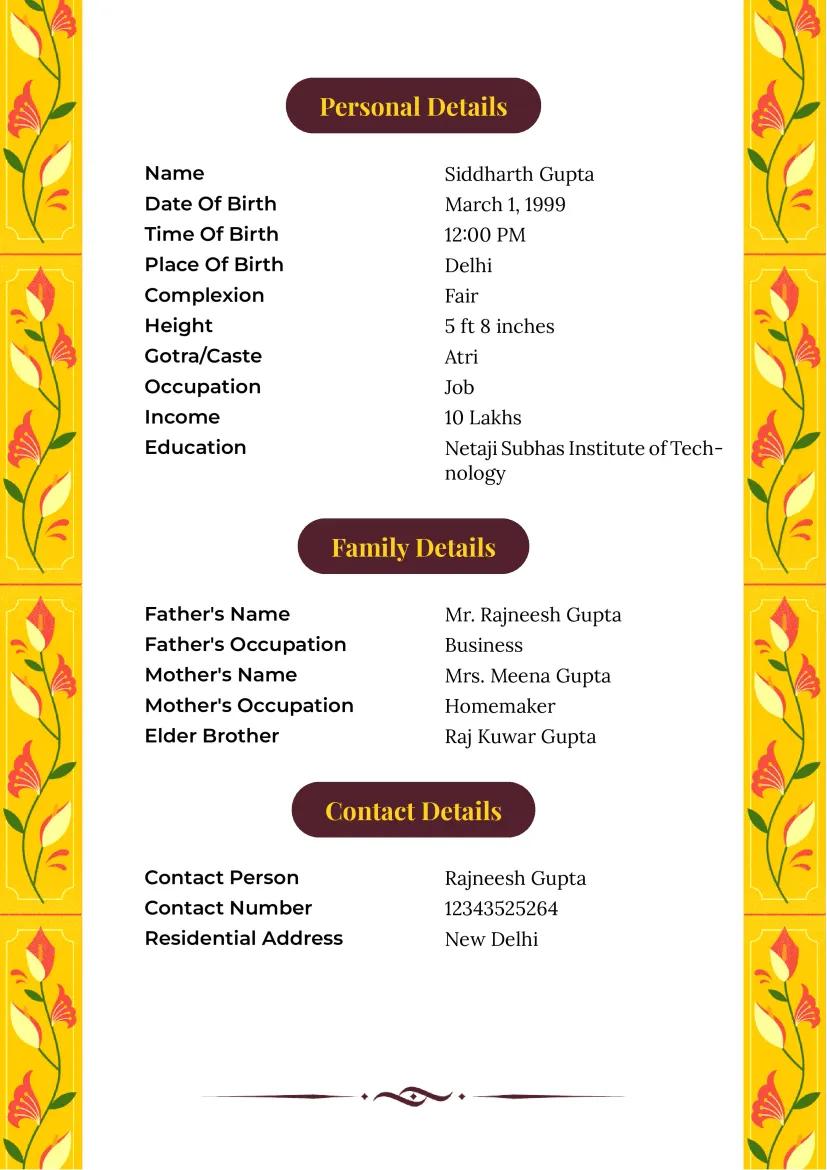
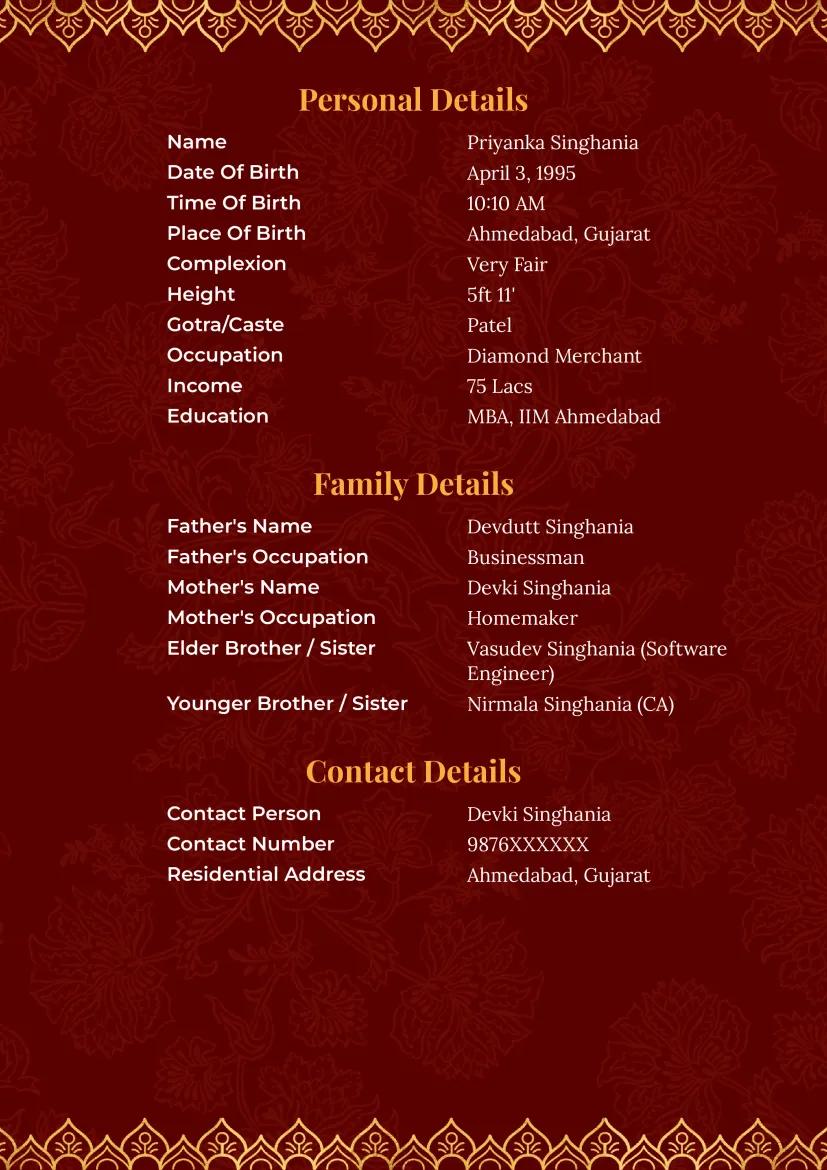
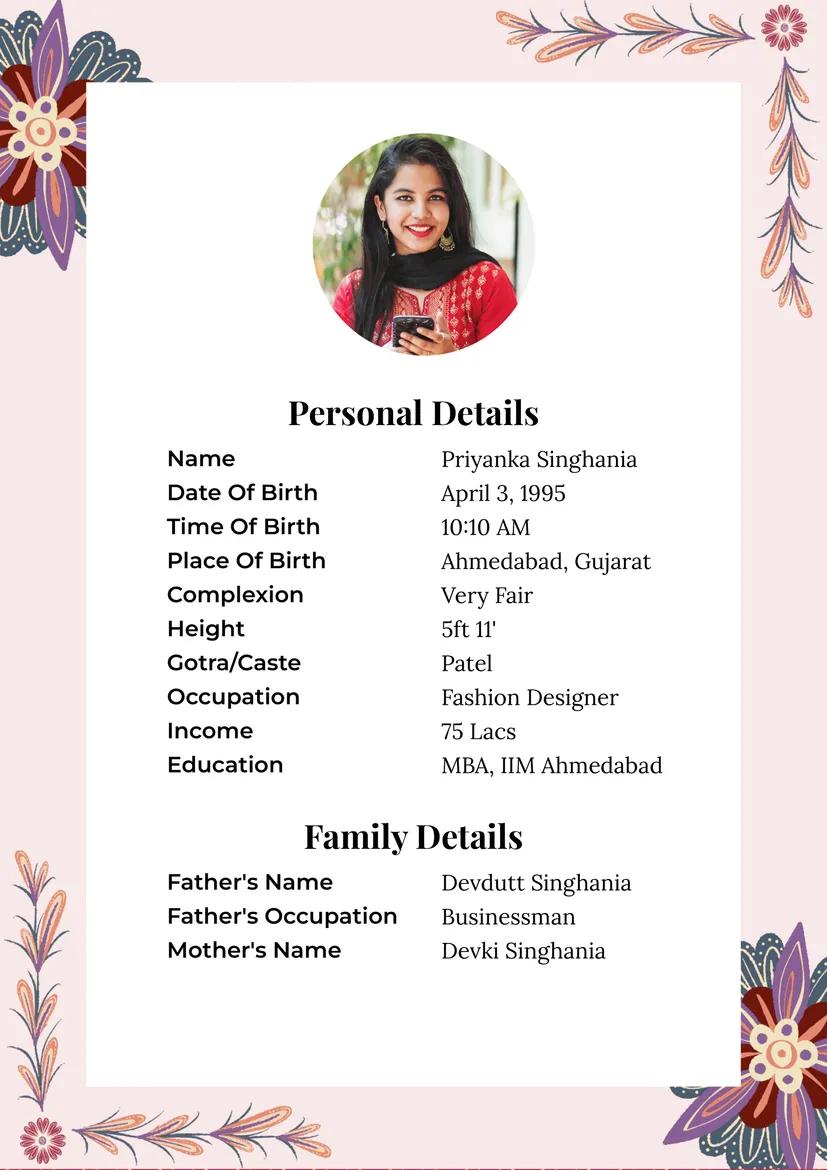
Use this annotated, two-column fictional Maratha biodata to see where each detail goes. Its tradition values are examples, not values calculated from the sample birth details. Replace them with details you have checked with your family, or remove the optional fields. The photo is a placeholder and the phone number is masked.
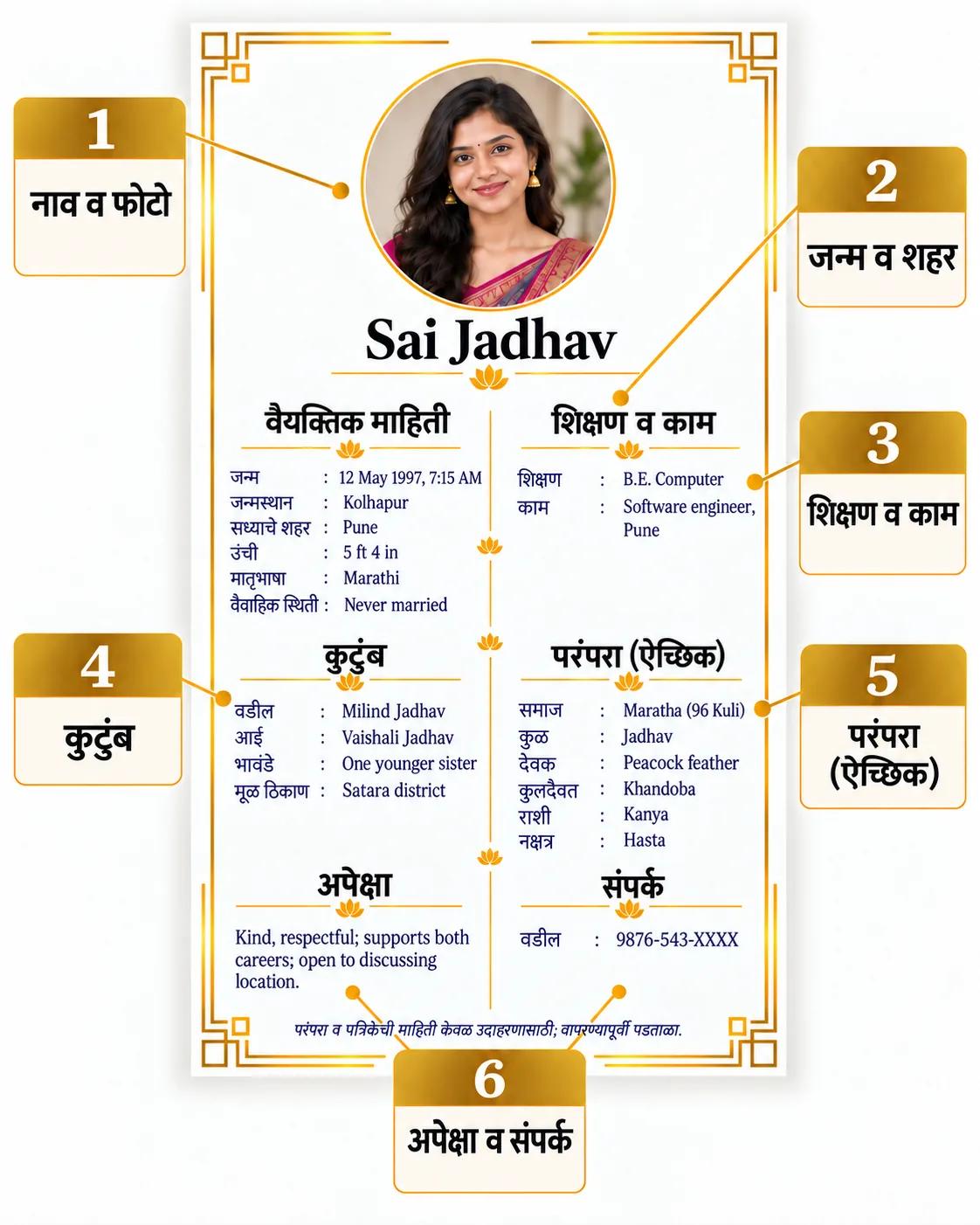
1. Lead with your name
Put your full name, current city and mother tongue at the top. Add a recent, clear photo if you are comfortable sharing one; it can help start a positive conversation. If a family member helps you prepare the biodata, agree on the photo together.
2. Separate birth details from current location
Write your date of birth and height clearly. Your date of birth stays accurate longer than your age alone. If you or your family value horoscope compatibility, add your verified birth time and birthplace. Label your current city separately. If you do not know the birth time, say so.
3. Show education and work plainly
Name your highest qualification, present role or business, and work city. “Software engineer in Pune” tells the reader more than “well settled.” Share an employer or income only if you are comfortable doing so.
4. Add a brief family picture
Keep parents or guardians, siblings and native place to a line or two. For example, “Parents live in Satara; one younger sister” gives useful context. Ask relatives before including their names, jobs or phone numbers.
5. Group optional community and tradition details
The sample groups a Maratha self-description, kul, devak, kuldaivat and horoscope values. You may use different terms or none of them. Check your family's wording: kul and gotra are different, and a surname cannot tell you someone's devak. If you include राशी, नक्षत्र, गण, नाडी or मंगळ, verify your birth details first. The values in the image are fictional; do not copy them into your biodata.
6. End with expectations and one contact
Write two or three practical preferences in positive language, such as values, work plans or location flexibility. Give your own contact or one family contact who expects replies. Keep your full home address and identity documents out of a PDF that may be forwarded widely.
Which community detail should you add?
If your community appears below, use its entry to decide what to ask at home. Check whether a more specific detail would help explain your biodata, then add one verified line if you want to share it. You can use the same basic layout whichever community you belong to.
- Maratha, including “96 Kuli”: Ask your family whether you use a kul or devak and whether your native village helps explain your roots. Add only the details you have verified; you do not need a clan list in your first PDF.
- Kunbi: Check the community wording you use at home. If your family uses a kul or devak, add the verified term; keep “Kunbi” if that is how you identify rather than replacing it with “Maratha.”
- Mahar: Decide whether you want to state your community, Buddhist identity, both or neither. Use your own wording and leave out any label you do not want to share.
- Mang / Matang: Ask which name you and your family use. Write that name if you want it included; add a tradition detail only if you actually use it.
- Chambhar: Decide whether a community line helps your introduction. If you include one, use your preferred description and state your current work separately.
- Dhangar: Check whether you use a subgroup name such as Hatkar or Khutekar. Add it only if you identify with it; your community name does not need to determine the rest of your biodata.
- Mali: Ask whether you use a more specific name, such as Phul Mali. Add the name you use, if any, and include a devak only if your family uses one.
- Koli: Check the precise Koli name you use and whether a native coastal or inland region matters to you. Write the verified detail instead of assuming an occupation or using “Agri” as a substitute.
- Lingayat / Veerashaiva: Use your own community and faith wording. Add a subgroup or practice if it matters to you; include gotra, devak or horoscope details only if you use them.
- Marathi Brahmin: Check whether you want to name a subgroup such as Deshastha, Chitpavan/Kokanastha or Karhade. Include gotra or pravara only when you have verified it with your family; do not infer it from your surname.
If you identify as CKP or Agri, use the name you actually use and check any extra detail with your family. The Maharashtra Social Welfare Commissionerate's 2011 table lists Mahar, Mang and Chambhar within the Scheduled Caste population. It does not rank those communities against Maratha, Kunbi or others, so do not treat this list as a population ranking.
Marathi is your language, not a rule about your faith or caste. If you are Buddhist, Muslim, Christian, Jain or belong to another Marathi-speaking community, state your faith or denomination in your own words if you choose to. Add Hindu lineage or horoscope fields only if they matter to you. If you are a Marathi Muslim, the Muslim biodata guide may help you choose details relevant to your family.
Common mistakes to avoid
- Packing every fact into one page. Start with a readable introduction. Send your full पत्रिका or extended family details later if requested.
- Confusing current city, native place and birthplace. Label each separately; all three may be different for you.
- Guessing kul, devak, gotra or horoscope values. Check the spelling and birth details with your family, or leave the field out.
- Treating an optional field as a rule. Choose whether to share your photo, income, community, faith or chart details. Avoid demeaning or discriminatory demands.
- Using a vague or inflated career description. Give your real qualification and role. Keep plans you have not decided on out of your biodata.
- Sharing private records too early. Your city and one contact are enough for an initial reply. Leave out your full address, identity numbers, bank details and relatives' unapproved phone numbers.
- Forgetting the reader on a phone. Check that your Marathi text, photo and contact remain readable in the exported PDF.
- Skipping final approval. Read through the text, photo, preferences and recipient list with any family member helping you before you circulate the biodata.
Check your biodata before sharing it
- Add your full name, current city, date of birth and height.
- State your education, actual role or business, and work city.
- Keep your family details to a few lines you have agreed to share.
- Attach a recent, clear photo if you are comfortable sharing one; agree on it with your family if they are helping.
- Include verified birth details or tradition terms if you or your family use them for matching.
- Write two or three practical preferences and choose one working contact.
- Open the PDF on a phone and check names, dates, Marathi text, the photo and contact details.
Frequently asked questions
Should I add a photo to my Marathi marriage biodata?
You do not have to add one. If you want to improve your chances of a positive first conversation, include a recent, clear photo you are comfortable sharing. If you prepare the biodata with your family, agree on the photo before sending it.
Are my kul, devak and gotra the same thing?
No. Your family may use these terms for different lineage and tradition details. Ask which terms they use and check the spelling. Do not fill a field from your surname alone.
Should I include birth details for horoscope matching?
If you or your family value horoscope compatibility, include your verified birth date, time and place. If you do not know the time, say so. Add chart details only when you can confirm them.
Should I publish income and a full address?
You do not need either for an initial introduction. Your actual role and city give the reader enough context to start. If income matters to both sides, share an agreed range later. Keep your full address and identity or financial records private.
What if my community does not use these tradition fields?
Leave the tradition block out. Your name, personal details, work, brief family context, preferences and one approved contact still make a useful first biodata. Use your own community or faith wording if you want to include it.
When you are ready, create your marriage biodata in a layout that keeps these sections easy to scan. For historical background on Marathi community names and devak, you can consult the Maharashtra State Gazetteer on marriage and kinship and its Parbhani community account. Use them as historical background, not instructions for your family.